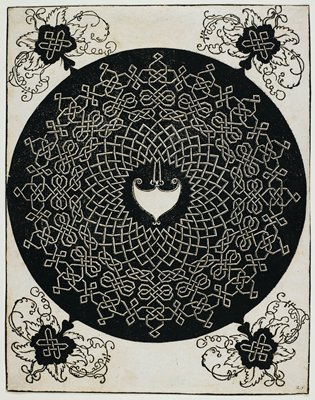
Knot with Heart-Formed Shield
Albrecht Dürer
1505
- Medium
- Woodcut
- Dimensions
- 10 11/16 x 8 5/16 in. (27.15 x 21.11 cm) (image)
- Genre
Tags
Germany
About
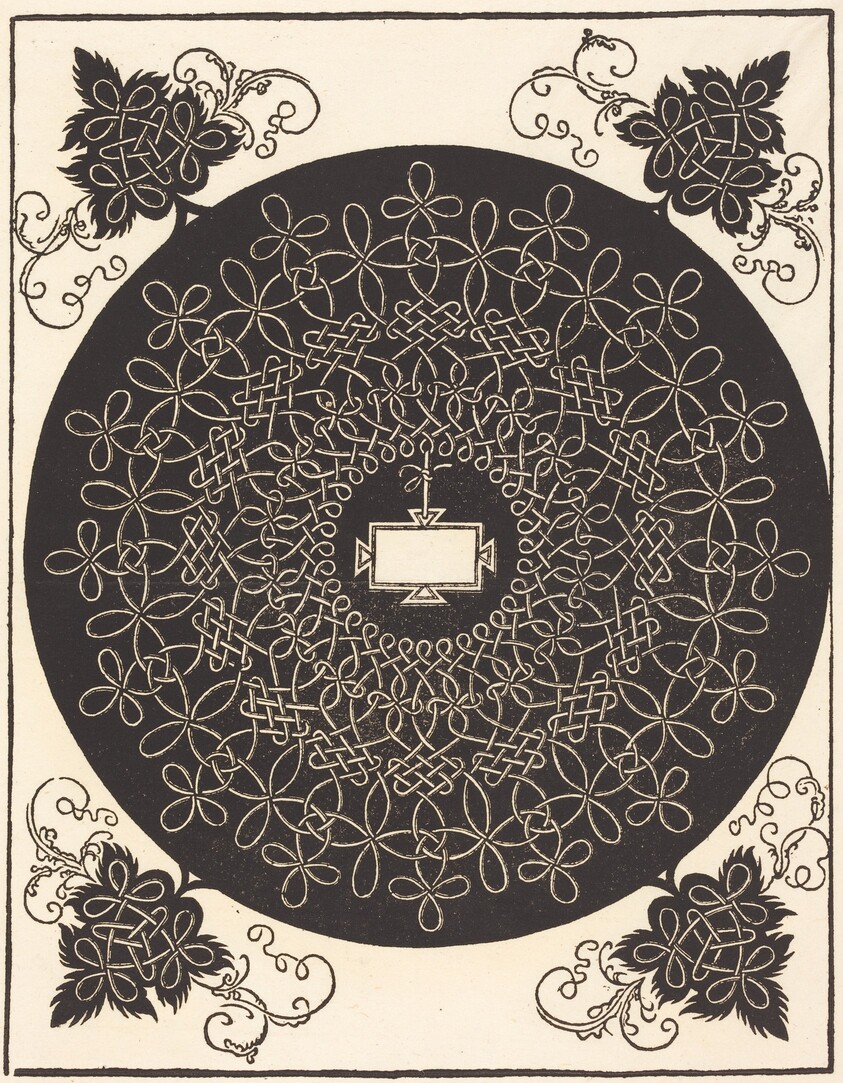
Albrecht Dürer may have intended these complex woodcuts, which he called knodn (knots), for embroidery or book covers. The designs imitate the inventions of another genius, Leonardo da Vinci (1452-1519), whose work Dürer probably saw on a visit to Venice around 1505. Leonardo's knots, in turn, were inspired by Islamic decorative motifs on goods entering Venice from the East. Both Renaissance masters were undoubtedly captivated by the geometry and intricacy of the interlaced style. Scholars now know that each knot is composed of repeated patterns rather than one continuous strand as previously thought.