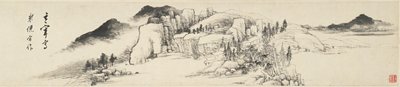
Misty Trees and Mountain Range
- Medium
- Ink on paper
- Dimensions
- 6 3/4 x 195 3/8 in. (17.15 x 496.25 cm)
- Genre
- Paintings
Tags
China
About
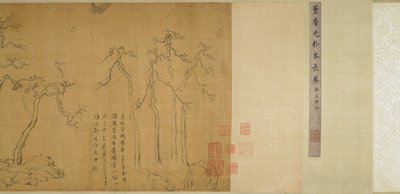
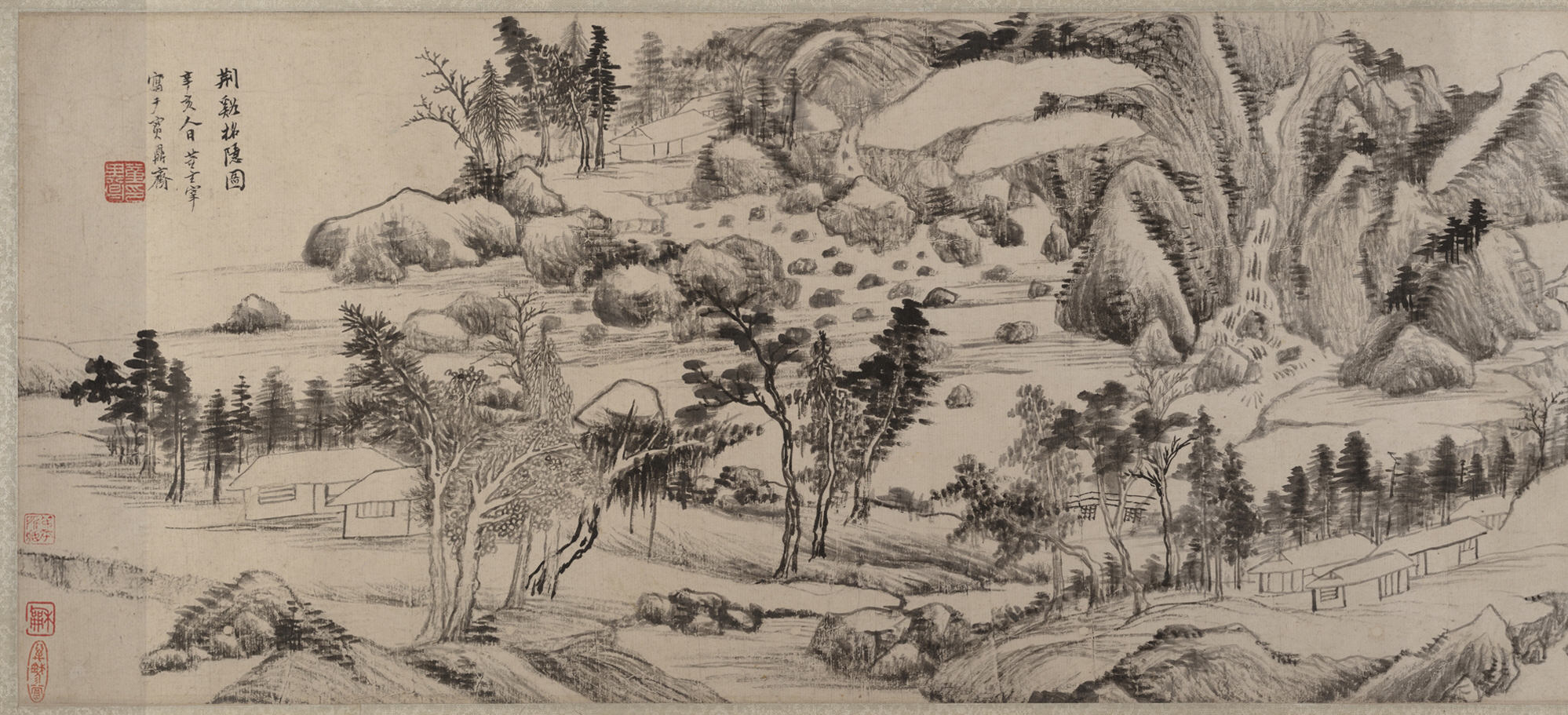
The so-called wet and dry styles, originated by two great masters, Mi Fei (1051–1107) and Ni Zan (1301–1374), were standard avenues of study for most Chinese literati artists. In this case, the combination of the two approaches in a single work intrigued Dong Qichang, an influential literati artist, calligrapher, and critic in the 1600s, as he noted in the inscription. The handscroll begins and ends with mountain ranges painted with flowing ink washes mixed with dots of wet ink, a technique typical of Southern school masters such as Mi Fu (1051–1107). In the midsection, dominated by plateaus and rocks, this technique is replaced by light structural drawing, which is familiar from the painting style of Ni Zan. Yet this is not a series in the manner of old masters, rather a synthesis of old idioms interpreted by the painter.