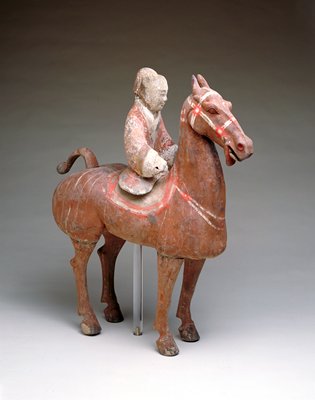
Equestrian figure
- Medium
- Earthenware with traces of pigment
- Dimensions
- 23 1/4 x 7 1/4 x 19 1/2 in. (59.06 x 18.42 x 49.53 cm) 23 1/4 x 7 1/4 in. (59.06 x 18.42 cm) (object part, a:horse) 5 3/8 x 1 3/8 in. (13.65 x 3.49 cm) (object part, b:tail) 9 3/4 x 7 1/4 in. (24.77 x 18.42 cm) (object part, c:rider)
- Genre
- Ceramics
Tags
China
About
Beginning in the Han dynasty, horses became closely associated with civil order, aristocratic identity, and public display. This tomb figure depicts a mounted rider in a composed, forward-facing posture, evoking the controlled movement of elite processions. In Han funerary art, horses frequently appear as markers of rank, carrying officials or attendants in scenes that mirror ceremonial parades and journeys through the landscape. The careful modeling and color choices emphasize the horse’s dignified presence. Placed in tombs, equestrian figures such as this ensured that the social standing, authority, and prestige of the deceased were perpetuated in the afterlife through the enduring symbol of the horse.