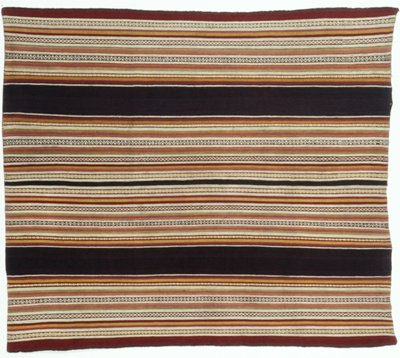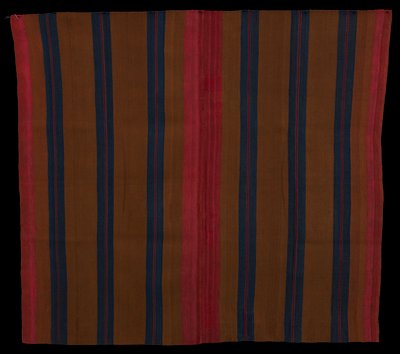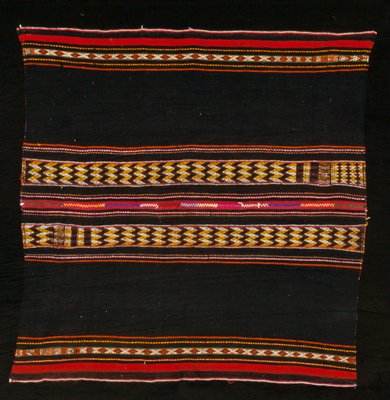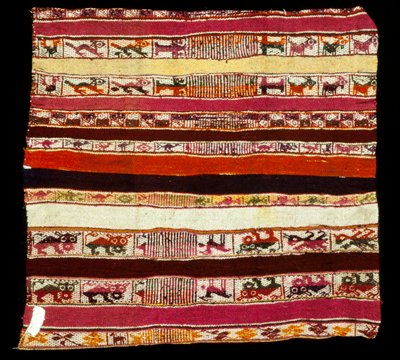
Poncho (Punchu)
- Medium
- Wool ikat
- Dimensions
- 64 x 56 in. (162.56 x 142.24 cm) (including fringe)
- Genre
- Textiles, clothing
Tags
Bolivia
About
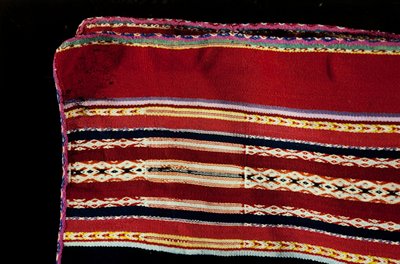
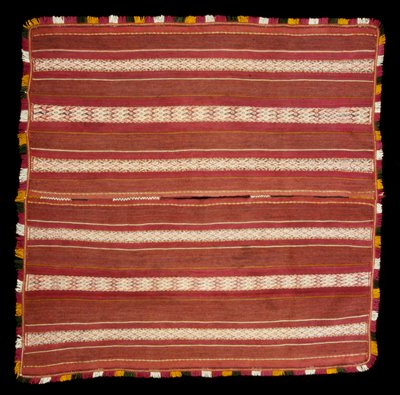
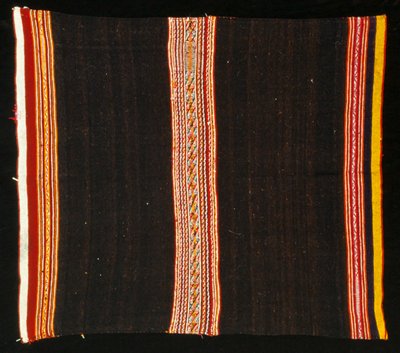
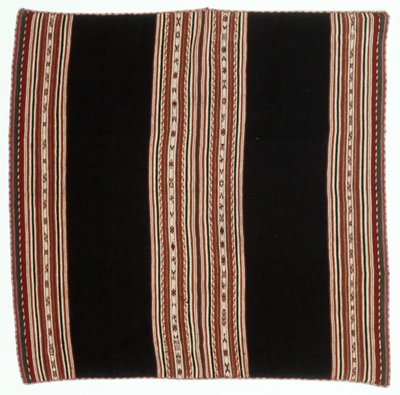
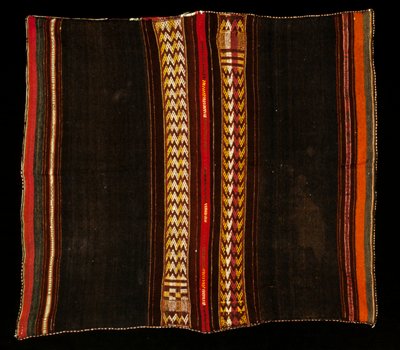
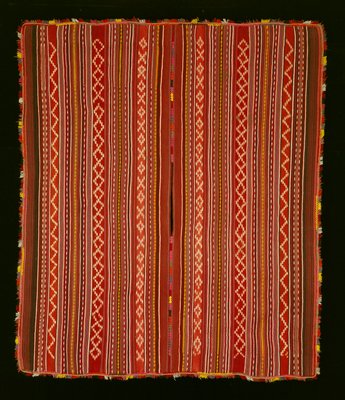
Since the Spanish conquest, sheep’s wool has joined alpaca, llama, and vicuña wool as a preferred fiber for weaving. Today, machine-spun yarn has become a symbol of status, but many garments are still made of hand-spun wool. The traditional spinning process takes part in three stages. The raw wool is first spun into a fine strand, and then spun again to create two plies. After it is dyed, it is re-spun very tightly, into what is called a “crepe twist.” This third and final step produces extremely elastic, fine yarn that creates a warm and durable garment. The zig zag and diamond patterns in this poncho were created by resist-dyeing (ikat).