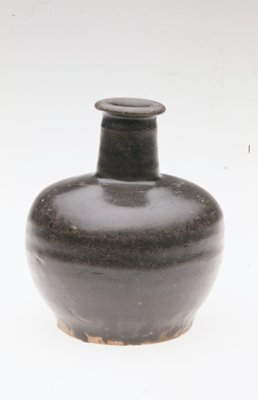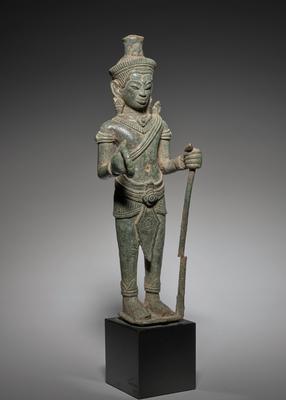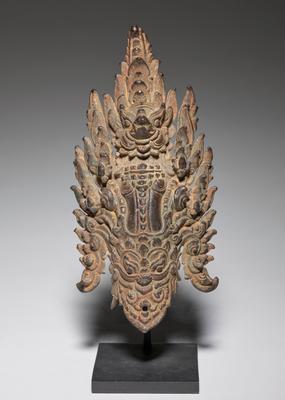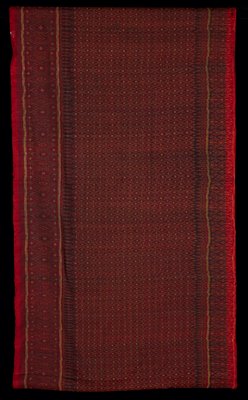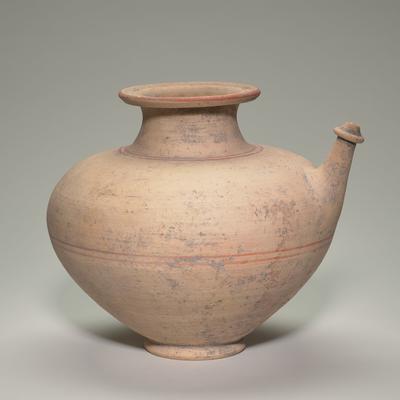
Kendi
- Medium
- Earthenware with red pigments
- Dimensions
- 9-1/4 x 11-3/8 x 10-1/8 in. (23.5 x 28.9 x 25.7 cm)
- Genre
- Ceramics
Tags
Cambodia
About
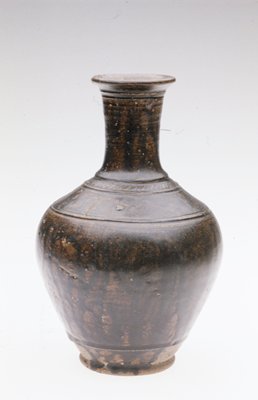
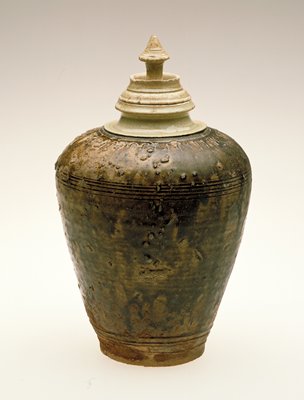
This seemingly simple, finely potted kendi (derived from the Sanskrit for waterpot) marks a critical juncture in the broader history of Southeast Asia. The bulbous vessel form is of Indian origin, the result of Indian traders who settled throughout Southeast Asia—a place known as the “Land of Gold” in the 100s–400s CE. With them came Brahman (Hindu) and Buddhist priests, who over time integrated themselves into local power structures, yielding new models of regional statehood with elaborate religious underpinnings. This unglazed vessel—whose form would become ubiquitous in Southeast Asia—was produced just prior to the Khmer Empire (802–1437 CE), a powerful kingdom responsible for many works in this gallery.