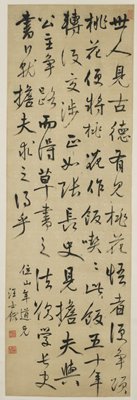
Commentary on the Peach Blossom Spring
Wang Shih hung
1700
- Medium
- Ink on patterned silk brocade
- Dimensions
- 48-3/4 x 15-3/4 in. (123.8 x 40.0 cm)
- Genre
- Calligraphy
Tags
China
About
Wang Shih-hung was one of the K'ang-hsi emperor's (1662-1723) favorite calligraphers. A native of Suzhou, he graduated number one in the annual jinshi degree or doctorate examination. Wang was a prolific poet and calligrapher and several collections of his verse have been published. His inscription here is a sardonic commentary on one of China's most revered literary themes: The Story of the Peach Blossom Spring. It reads in part: Mankind, having been informed that a gentleman had become enlightened by viewing peach blossoms, lept forward in unison to sing the praises of the peach blossom. This approach has been reiterated for fifty years and nothing of any relevance is left to enlighten us. This case parallels the story about (the Tang dynasty wild script calligrapher) Chang Ch'ang-shih acquiring his method of writing grass script by observing a traffic dispute between a porter and a princess. Can one learn Ch'ang-shih's calligraphic style by observing a porter? Written by Wang Shih-hung for Wei Shan-mien, the elder brother of the Way (Tao).