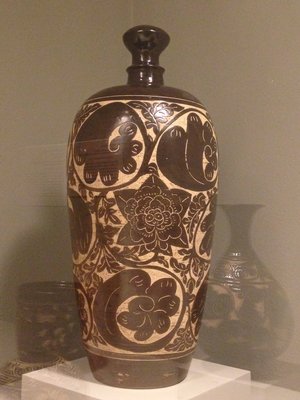
Bottle with Garlic-Head Mouth
- Medium
- Cizhou type ware Stoneware with cut-glaze floral decoration
- Dimensions
- 22 1/4 x 9 1/2 in. (56.5 x 24.1 cm)
- Genre
- Ceramics
Tags
China
About
Distinguished by its large size and unique mouth, this storage vessel is an exceptional example of the brown-glazed stoneware manufactured during the Xixia kingdom (1022-1227) established in north China by Tangut invaders in the early 11th century. Excavation of ancient kilns during the 1980's near Lingwu in northern Ningxia province revealed the district to have been an important center of utilitarian glazed stoneware during the twelfth and thirteenth centuries. Related bottles from this district have been discovered in adjoining provinces of Kansu and Inner Mongolia. Unlike their counterparts at Cizhou type kilns in the central plains, potters of the Lingwu region did not coat their cut-glaze vessels with white slip before applying the glaze. As a result, the exposed body clay assumes an oatmeal color in firing and the brown floral designs appear against a buff ground rather than a white one.