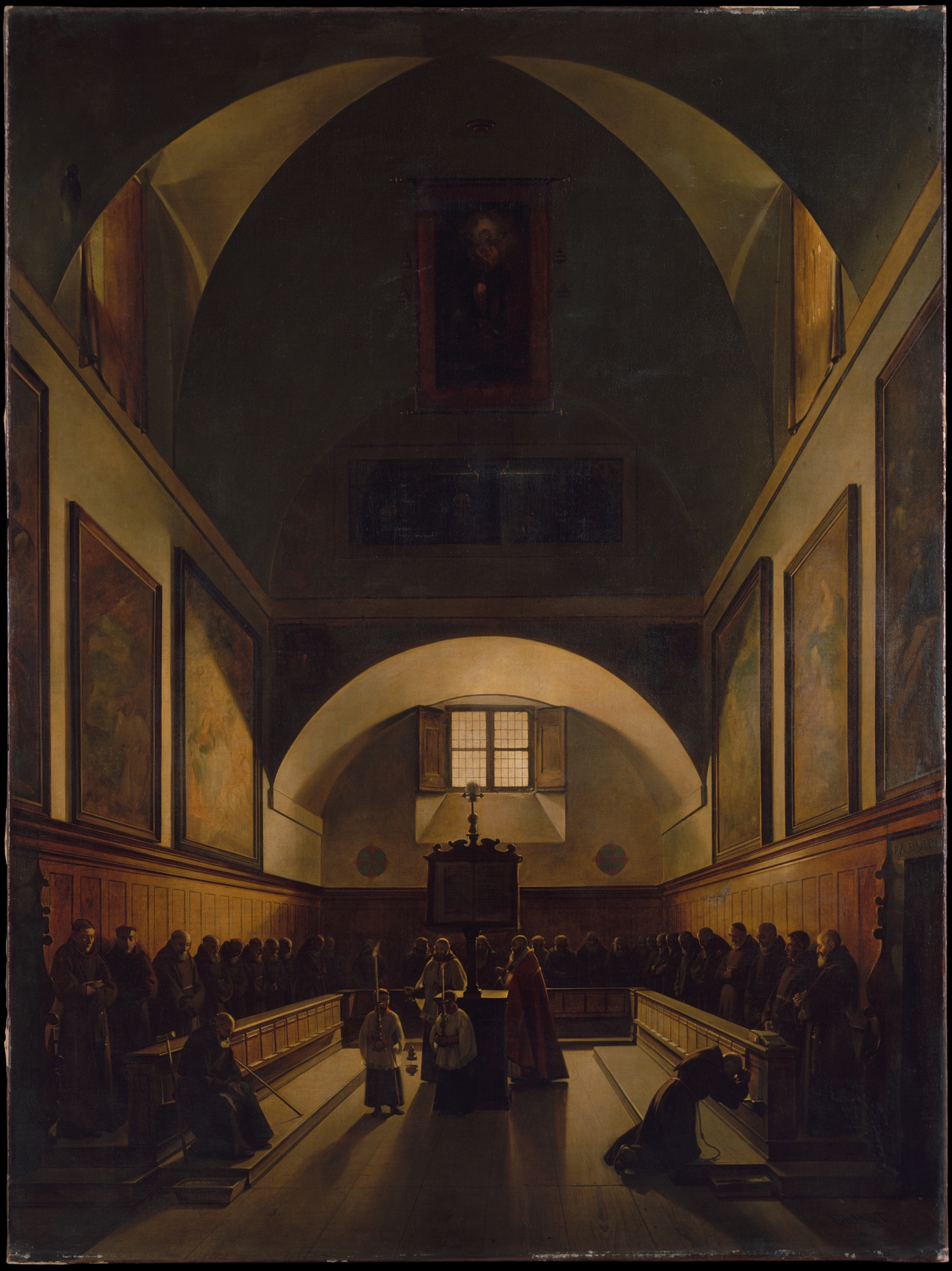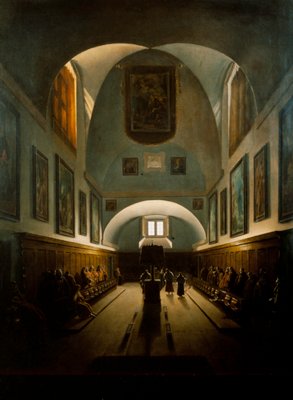
The Choir in the Capuchin Church on the Piazza Barberini, Rome
- Medium
- Oil on canvas
- Dimensions
- 51 1/2 x 40 3/4 in. (130.81 x 103.51 cm) (sight) 52 1/8 x 41 3/8 in. (132.4 x 105.09 cm) (canvas) 63 x 52 x 4 1/4 in. (160.02 x 132.08 x 10.8 cm) (outer frame)
- Genre
- Paintings
Tags
Italy
About
François-Marius Granet conceived this painting during the French occupation of Rome, after Napoleon had suppressed the monasteries. Granet visited the Capuchin church depicted here shortly after it was shuttered in June 1810, writing, “The good Capuchins were no longer there. I ran through the dormitories, the refectory; everything was silent. I entered the choir; same silence; the stalls formerly occupied by a hundred monks were now empty and dust was beginning to gather.” Thus, this painting is a nostalgic reimagining of a vanished world. The ethereal scene was so popular, especially in France, that Granet painted it at least fifteen times. In this version he included himself with a sketchbook in the foreground.