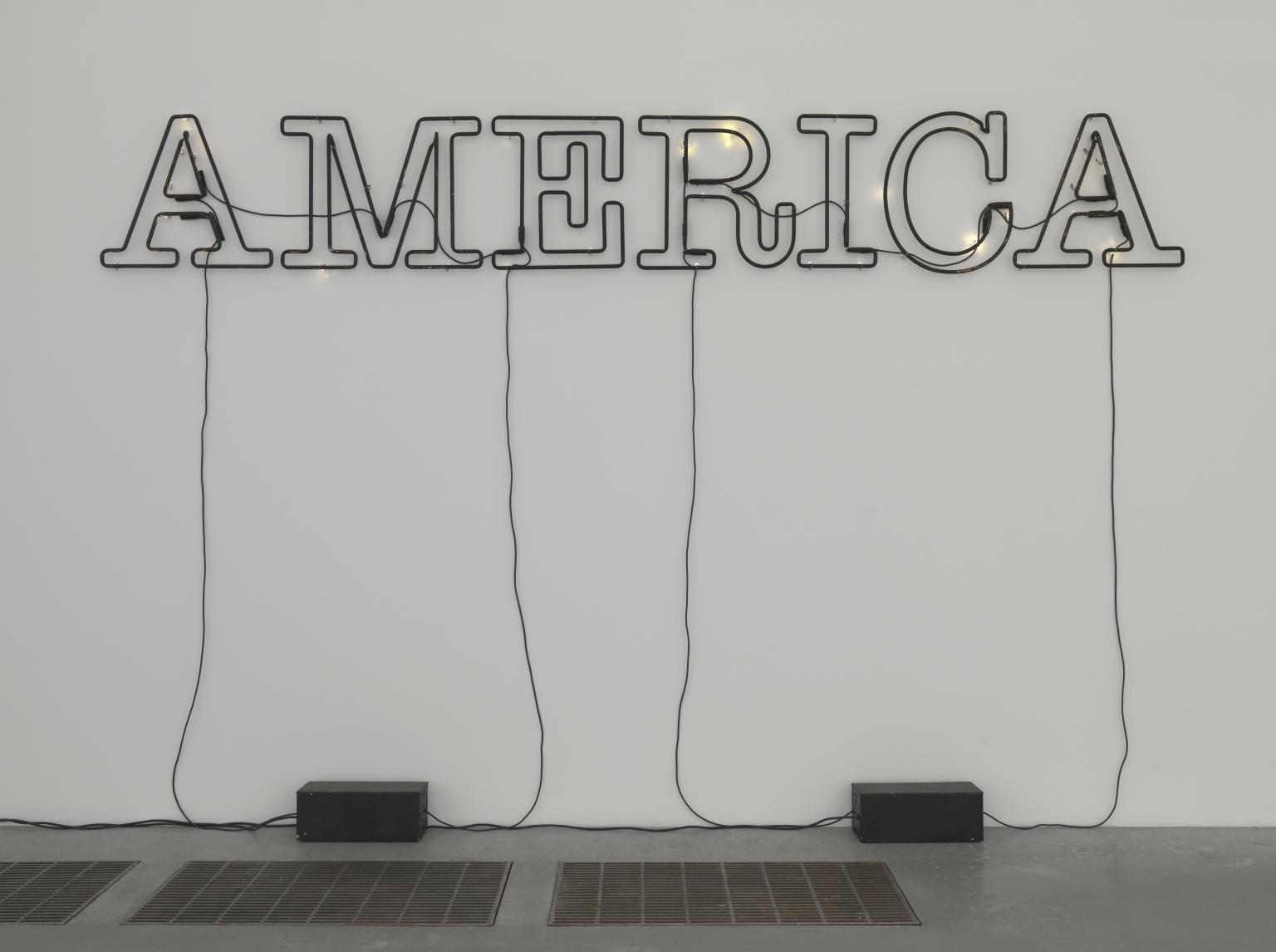
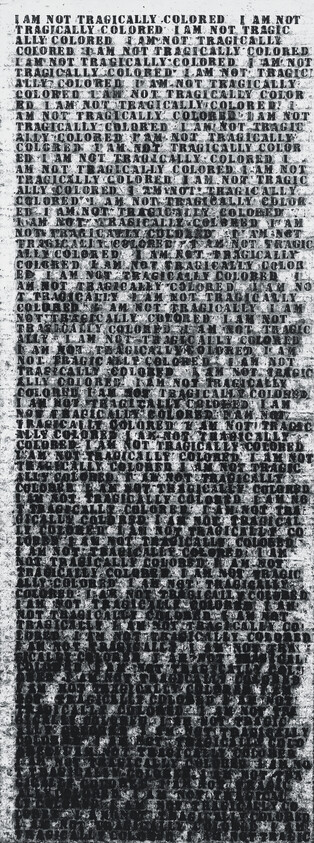
![Untitled: Four Etchings [C]](https://1.api.artsmia.org/43462.jpg)
Untitled: Four Etchings [C]
Glenn Ligon
1992
- Medium
- Soft-ground etching, aquatint, spitbite, and sugarlift etching on heavy black paper
- Dimensions
- 23 1/2 x 15 7/8 in. (59.69 x 40.32 cm) (plate) 25 x 17 1/2 in. (63.5 x 44.45 cm) (sheet)
- Genre
Tags
United States
About
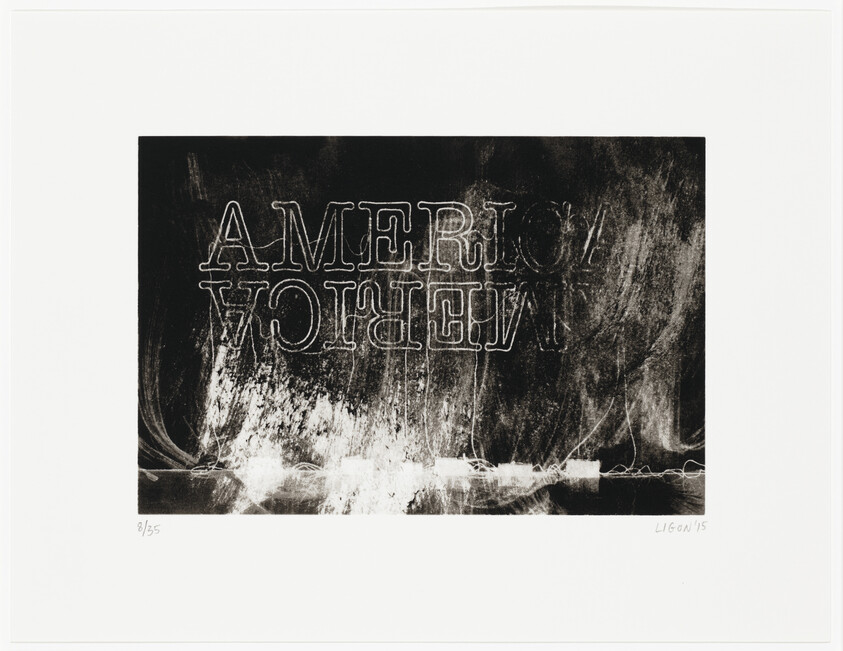
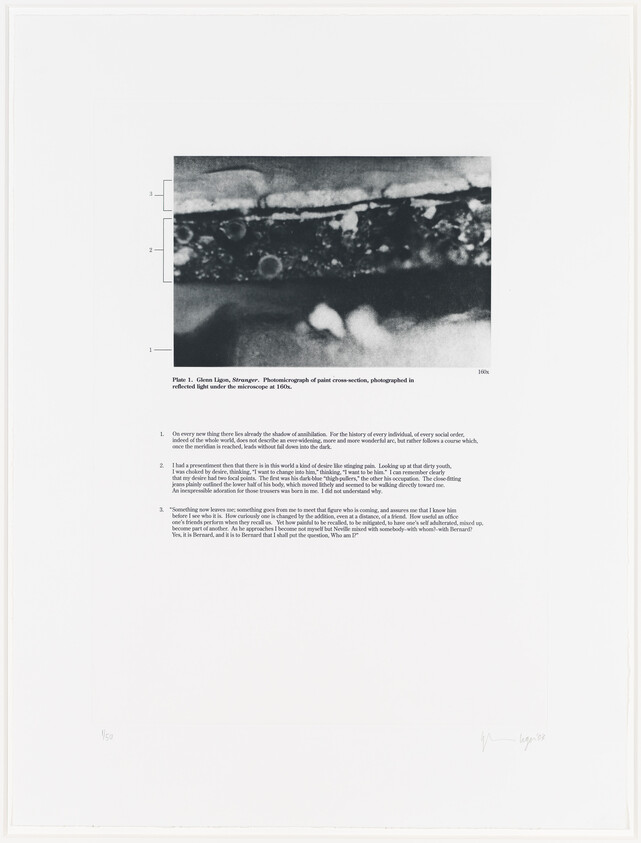
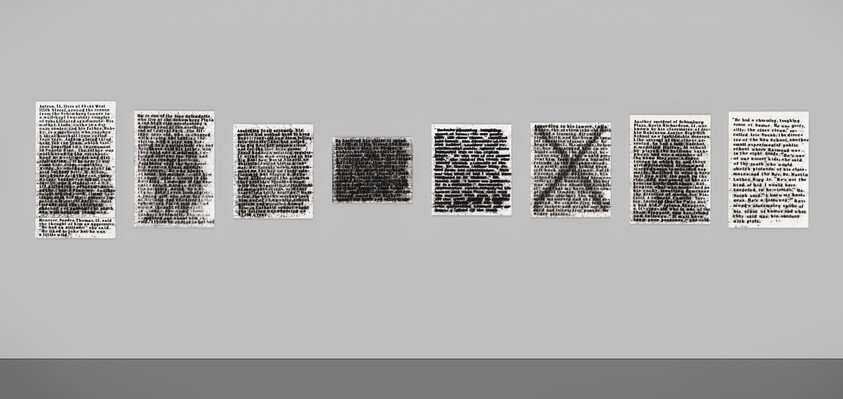
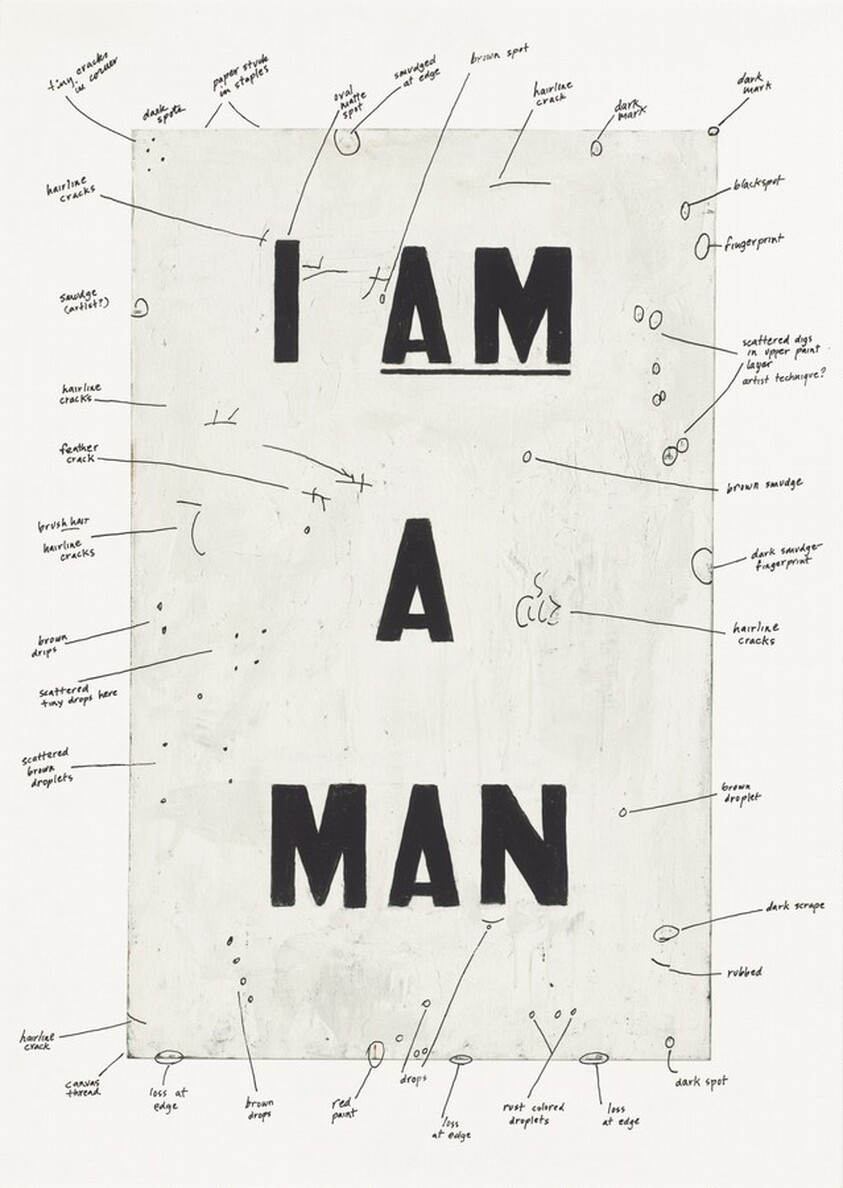
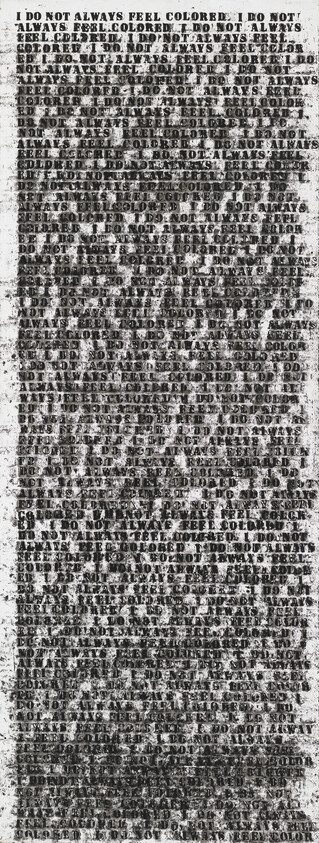
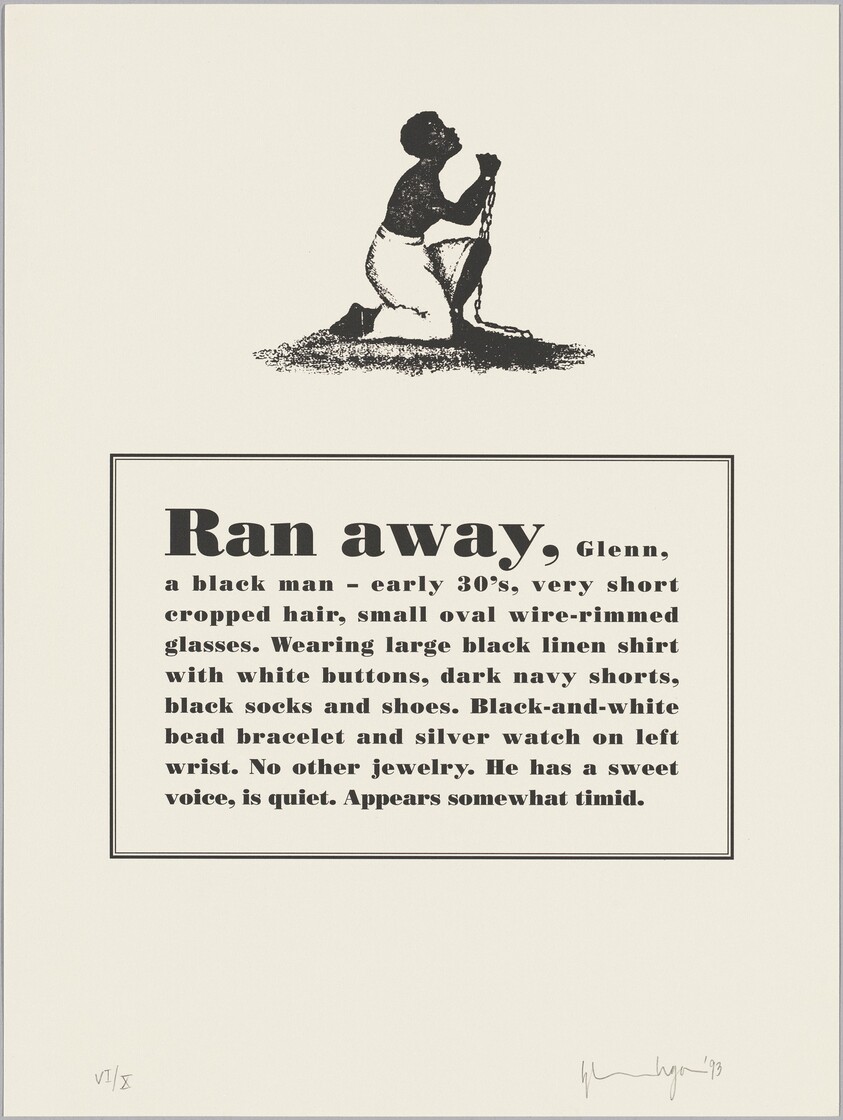
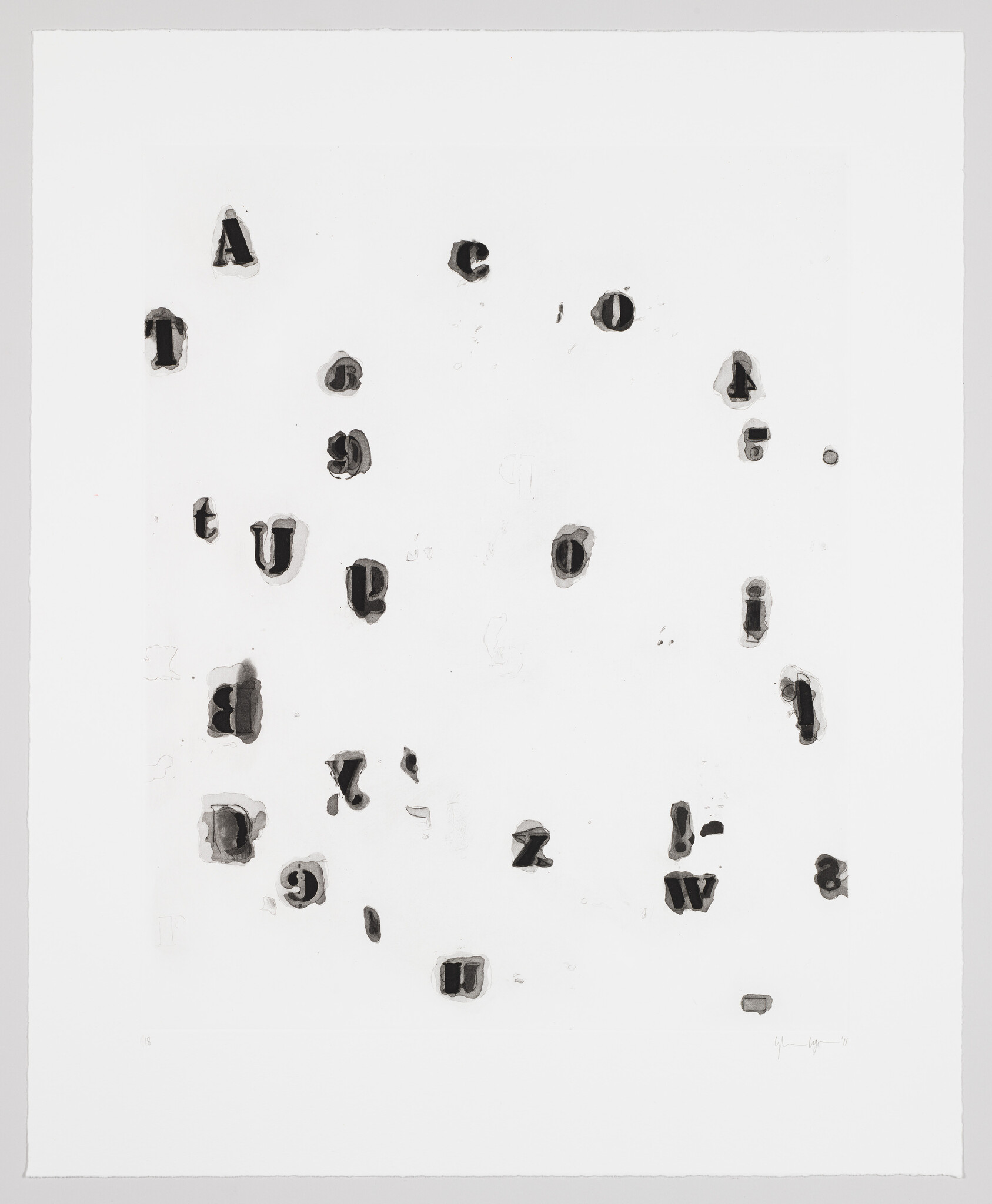
Painter, photographer, and printmaker Glenn Ligon's provocative artwork mines the history of African-American culture, from slave narratives to the Million Man March on Washington, D.C. In this suite of untitled etchings, Ligon addresses lingering racism in America by invoking the autobiographical writings of renowned black authors. The prints with black texts printed on white paper feature excerpts from the 1928 essay How It Feels to Be Colored Me by Zora Neale Hurston. Ligon explains: The prints play with the notion of becoming 'colored' and how that 'becoming' obscures meaning and also created this beautiful, abstract thing. The pair with black texts printed on black paper feature texts from Ralph Ellison's 1952 novel Invisible Man, which describes blacks in America as ghosts, present and real, but because of racism, remaining unseen. Together, the pairs of prints symbolically illustrate the continued separation between the races.
![Untitled: Four Etchings [D]](https://api.nga.gov/iiif/90f2138d-c6c7-44cf-b739-f3bcf92b7ce3/full/843,/0/default.jpg)