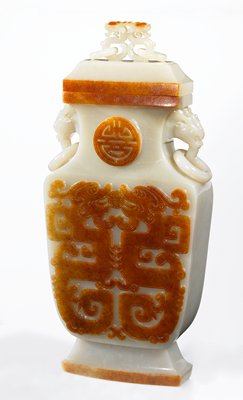
Covered Vase
- Medium
- White and brown jade in vertical strata
- Dimensions
- 11 5/8 in. (29.53 cm)
Tags
China
About
This vase is considered one of the most striking examples of two-color jade in existence. The artist has used the natural colors of the vertical strata to great advantage in depicting the paired dragons and the circular shou, or longevity, symbol that appears in brown against the white background. The rear of the vessel, though carved with identical motifs, is entirely white. The practice of highlighting aspects of a work by carving in accordance with existing color variations was already prevalent by the Song dynasty (960-1280). The technical mastery of Qing artisans and the greater variety of jade available allowed them to produce spectacular objects like this. Keeping with eighteenth century taste, the vessel shape in this instance is vaguely antiquated. Although based on a type of ancient storage jar, this vase presents the stylized and decorative paired dragons, animal masks and meander patterns in a way quite different from the bronzes of the past that it emulates.