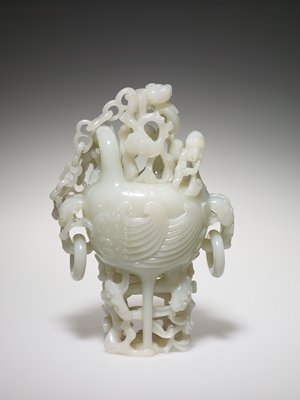
Covered Vase
- Medium
- White jadeite
- Dimensions
- 8 1/2 in. (21.59 cm)
Tags
China
About
During the late Qing period, jade was used more than ever for decorative purposes. As technical boundaries were challenged, the treatment of form became increasingly complex. By the late eighteenth and ninteenth centuries, virtuoso carving was much admired, and elaborately carved works like this vase gained in popularity with the aristocracy. The vessel consists of two swans grasping aquatic plants in their bills; ring handles hang at each side, and an openwork cover decorated with reticulated floral motifs is attached to the body by several links of chain. Remarkably, all this is carved from a single block of white jadeite. This piece clearly aims to delight through the sheer virtuosity of its carving rather than the beauty of its form or any symbolic references to Chinese antiquity. Typically, the more colorful and showy pieces of jadeite were used for this type of work, which became a hallmark of the early nineteenth century.