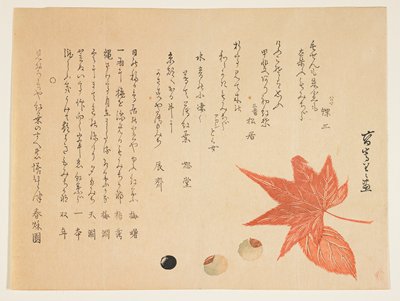
(Autumn leaves and nuts)
Kō Sūkoku II
1850
- Medium
- Woodblock print (surimono), ink and color on paper
- Dimensions
- 7 1/4 x 9 3/4 in. (18.4 x 24.8 cm) (image, sheet)
- Genre
Tags
Japan
About
Brought back from an outing in the mountains, these colored leaves and nuts suggest that autumn is settling over the countryside. It is time to view the fall colors. In the Edo period (1603-1867), autumn was also the season for poetry gatherings. The quantity of surimono produced in celebration of autumn was second only to shunkyø (New Years). In addition to colorful leaves, the moon, geese, deer, insects, and a variety of autumnal vegetables and flowers were typical subjects for the poems composed at such gatherings. The painter Kø Sñkoku II was a member of the Hanabusa School, founded by Hanabusa Itchø (1652-1724), a prominent painter who also studied poetry under the master haiku poet Matsuo Bashø (1644-94). Hence, the Hanabusa School artists had close ties with literary salons and poetry associations. Following this tradition, Sñkoku contributed to a number of poetry surimono publications.