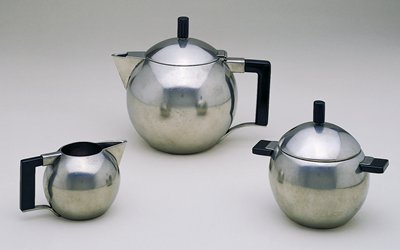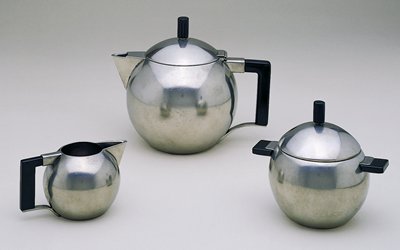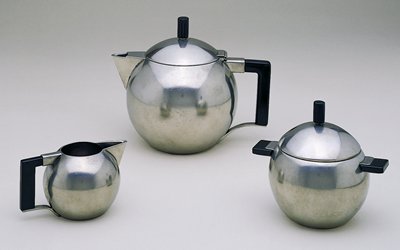
Teapot from a tea service
Theodore Hooft
1930
- Medium
- Pewter
- Dimensions
- 6 x 7 1/4 x 5in. (15.2 x 18.4 x 12.7cm)
- Genre
- Metalwork
Tags
netherlands
About
The stark planar elements introduced by Gerrit Rietveld and members of the de Stijl movement (1919-1928) found their way into the work of several metalworkers. Inspired by a rational, intellectural approach to design, Hooft preferred simplified form, proportion and clarity. The unadorned, dull patina and squared-off handles of this tea set were produced at minimal cost: stylistic purity on a shoestring budget aimed at a deflated market. Few sets were produced, finding little favor with a public still preferring Empire and rococo-inspired designs.