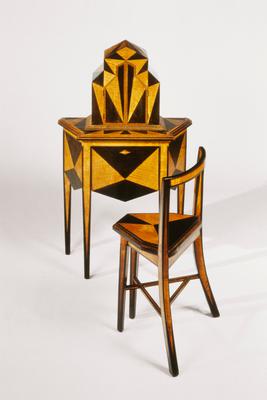
Telephone stand
Abel Faidy
1927
- Medium
- Ebonized walnut and maple marquetry with mechanized doors
- Dimensions
- 44 x 26 1/2 x 13in. (111.8 x 67.3 x 33cm)
- Genre
- Furniture
Tags
Switzerland
About
The American Art Deco movement is conveniently divided into two principal phases: Zigzag Moderne of the 1920s and Streamline Moderne of the 1930s, the first reflecting the dominance of the triangle and T-square and the second the French curve and the compass. Few works capture the essence of the Zigzag Moderne better than Abel Faidy's telephone cabinet and matching side chair. Among the contributing factors to this delightfully fragmented design were the interplay of light and shadows seen in America's new vertical cityscape (overlapping skyscrapers), Cubism, the mania for Egyptian and South American cultures (pyramids and ziggurat-shaped temples), and even electricity (jagged lighting bolts). The doors of the cabinet are wired to open when the candlestick telephone, housed inside, rings.


