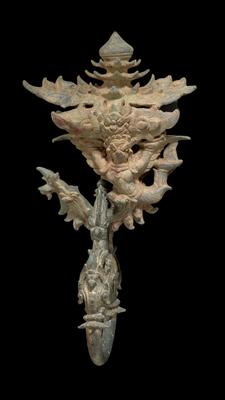
Palanquin Hooks
- Medium
- Bronze with traces of gilding
- Genre
- Metalwork
Tags
Cambodia
About
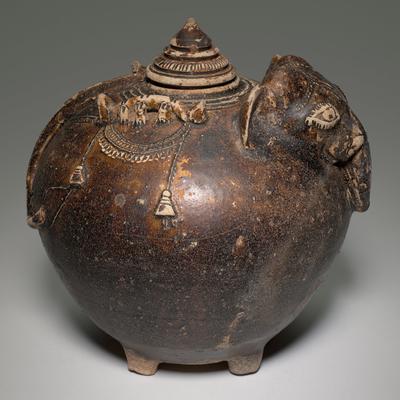
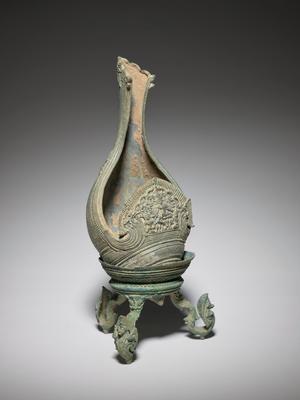
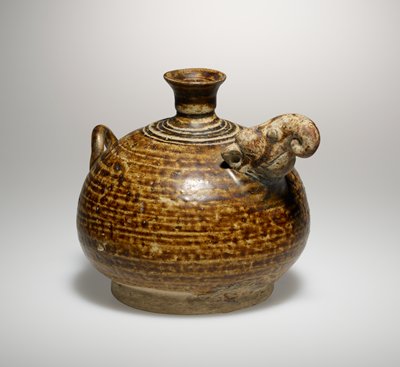
At the height of the Khmer Empire (802–1437 CE), royalty and aristocracy traveled in handheld carriages, or palanquins. Transported on poles shouldered by humans, the carriage was suspended from decorative bronze hooks. Rich in imagery, the top ring consists of stylized lotuses, symbolizing purity, surmounted by a bud. Beneath is a kirtimukha, a fierce-faced monster motif intended to ward off evil spirits, which is lifted by Garuda, a mythical bird often depicted carrying the Hindu god Vishnu through the sky. Underscoring Khmer ideas of divine kingship, Garuda is also a conqueror of serpents (nagas), which form the loops hanging from its tail. As seen in the waterpot (kendi) on the left, Hindu theology arrived from India, but the combination of such elements into a luxurious, utilitarian bronze is distinctly Khmer.