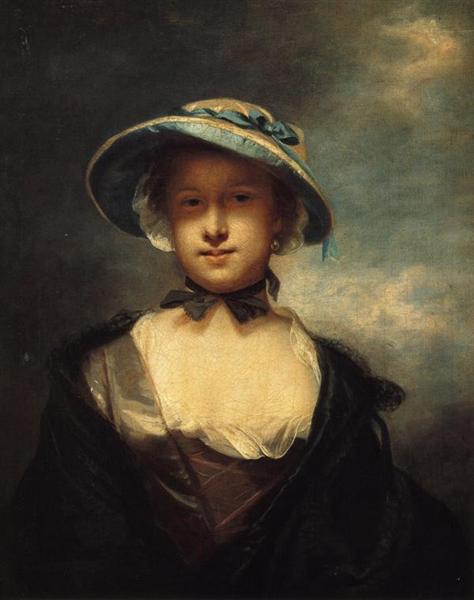
Miss Phillis Hurrell (1746–1836)
Joshua Reynolds
1762
- Medium
- Oil on canvas
- Dimensions
- 35 5/8 x 28 1/2 in. (90.49 x 72.39 cm) (sight) 46 x 39 in. (116.84 x 99.06 cm) (outer frame)
- Genre
- Paintings
Tags
England
About
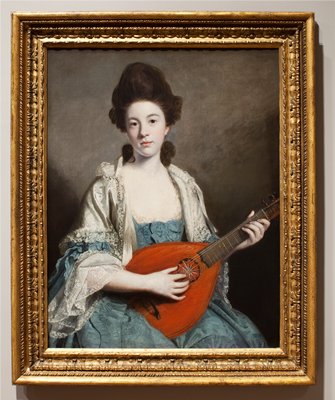
Phillis Hurrell was the only child of an old aristocratic family from Devon, England, and was about sixteen years old when Joshua Reynolds painted her portrait. Elegantly dressed in a lace-trimmed mantle for homebound leisure, she looks up from her cittern (or English “guittar”) as if her daily practice has just been interrupted. The instrument was immensely popular among English women of rank, following Queen Charlotte’s musical lead. Reynolds's studio records indicate that Miss Hurrell sat for the artist six times in June of 1762. The artist completed the painting the following month, delivering it to her family's home on July 29. Four years later, in 1762, Miss Hurrell married Robert Froude. The couple had four children. A later account of the family describes Mrs. Froude's many losses after her husband's death in 1770, "Phillis the widow, a person of strong character, lived on for sixty-six years longer, and saw the grave opened, or opening, for nearly all her brilliant and fated grandchildren. Her babes, left fatherless in 1770, were Mary, Margaret, and Elizabeth; her son Robert Hurrell [Froude] was a posthumous child. The latter was to rise to more than local eminence, known throughout an exceptionally long life as Rector of Dartington, and from 1820 on, as Archdeacon of Totnes in the diocese of Exeter" (Louise Imogen Guiney, 1904).