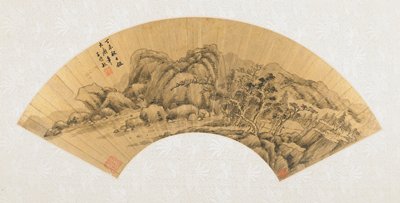
Landscape
Wang Shimin
1667
- Medium
- Ink and color on gold-dusted paper
- Dimensions
- 9 1/8 x 20 3/8 in. (23.18 x 51.75 cm) (image, sheet) 38 x 63.5 cm (with mat)
- Genre
- Paintings
Tags
China
About
Wang Shimin, the eldest of the “Four Wangs, ” shaped the Orthodox school of early Qing painting, which emphasized disciplined brushwork. The Four Wangs (Wang Shimin, Wang Jian, Wang Hui, and Wang Yuanqi) were related by kinship and discipleship, and together established a lineage grounded in study of Yuan dynasty (1271-1368) masters. Unlike the bold, spontaneous styles of individualist painters, Wang’s landscapes are built from carefully layered ink strokes that create solid, monumental forms. In this fan, rounded mountains rise in rhythmic tiers, their contours softened by trees and rocks rendered with steady, even-textured strokes. The composition favors balance over drama, embodying the Orthodox ideal of moral clarity and cultivated order. Wang’s restrained yet authoritative manner defines the school’s vision of landscape as enduring stability.