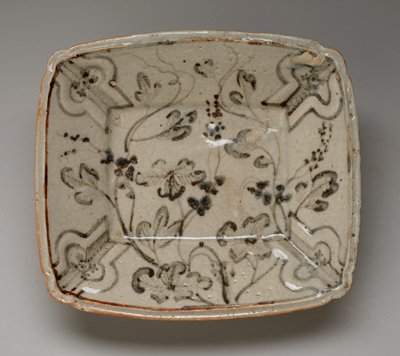
Square bowl with pattern of hanging vines and fruit
- Medium
- Mino ware, Shino type, stoneware with underglaze iron
- Dimensions
- 1 3/4 x 9 9/16 x 8 1/2in. (4.4 x 24.3 x 21.6cm)
- Genre
- Ceramics
Tags
Japan
About
During the sixteenth century, the potters of Mino, near Nagoya, developed a number of new ceramic styles for use in the tea ceremony. Shino ware was characterized by a thick, snowy surface which resulted from a feldspathic glaze fired for an extended period. Shino potters decorated their works by painting simple designs on the surface of the clay with iron-oxide slip prior to glazing. After firing, the resulting patterns shone softly through the milky glaze, producing a pleasingly subtle effect. Bowls such as this would have been used in the formal kaiseki meal as part of an extended tea ceremony.
![Netsuke [Actor with Fox Mask]](https://1.api.artsmia.org/31605.jpg)