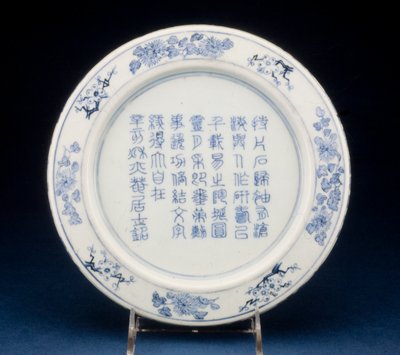
Inkstone
China
1736
- Medium
- Porcelain with underglaze blue decor
- Dimensions
- 1 3/4 x 9 3/4 x 9 3/4 in. (4.45 x 24.77 x 24.77 cm)
- Genre
- Ceramics
Tags
China
About
Although stone was the most suitable material for grinding ink, ceramic inkstones became popular in the late Ming dynasty. The most common shape for porcelain inkstones was a flattened cylinder with its center left unglazed for grinding. This surface was surrounded by a groove, and the inkstone was typically decorated in underglaze blue-and-white. This one displays flowers and fruit of the fall and winter seasons, namely chrysanthemums and plums. On the bottom is a 49-character verse imitating, in archaic style, a Bronze-Age inscription.