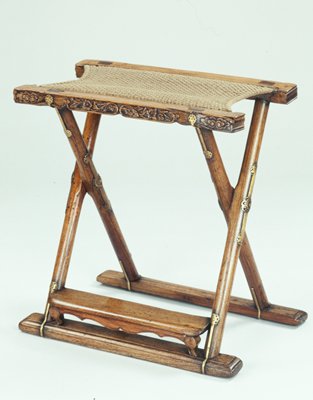
Folding Stool
- Medium
- Huanghuali hardwood
- Dimensions
- 18 5/16 x 18 1/8 x 9 3/8in. (46.5 x 46 x 23.8cm)
- Genre
- Furniture
Tags
China
About
The folding stool is one of the most enduring forms of Chinese furniture. Introduced by nomadic tribes of the northern and western regions during Han (206 b.c.-a.d.220), the so-called Barbarian seat eventually became popular throughout China. Simple in concept, light-weight, economical, and highly portable, the folding stool had spread to all levels of Chinese society by the Tang dynasty (618-906) and is still in use today. While the folding stool was not a seat reserved for important persons or visitors within the household, its status changed during travel when officials and military officers used them for temporary seating. Folding, wooden furniture incurs heavy use and is especially vulnerable to breakage. Few decorated hardwood examples datable to the Ming dynasty have survived.