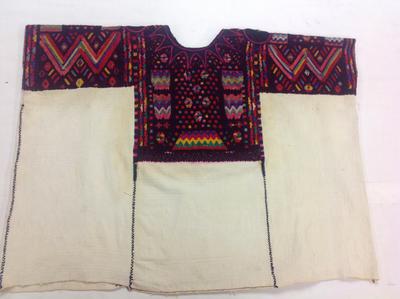
Woman's blouse (Huipil)
1950
- Medium
- Wool, silk, cotton, synthetic, metal; supplementary weft patterning, embroidery, appliqué
- Dimensions
- 27 x 36 in. (68.58 x 91.44 cm)
- Genre
- Textiles, clothing
Tags
Guatemala
About
Huipiles from Chichicastenango exhibit a wider range of imagery than those from other villages. The oldest design still in use is the double-headed eagle, which has evolved from a geometric, yet recognizable representation to the highly abstracted forms seen here. Other huipiles feature geometric motifs, such as the multi-colored zigzag, while contemporary examples exhibit naturalistic floral imagery adapted from European needlework patterns. (Please visit the first floor Family Center to view this style of huipil.) Despite the variety of designs, huipiles from Chichicastenango are instantly recognizable by the appliqué and embroidery sunburst that encircles the neck opening. Black taffeta rosettes are often applied at the shoulders and are said to symbolize the moon.