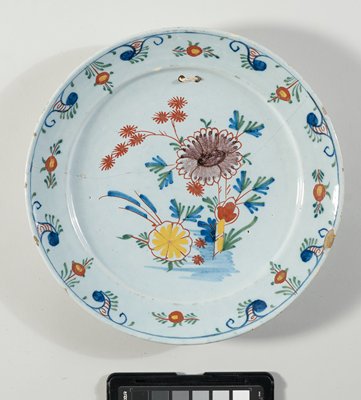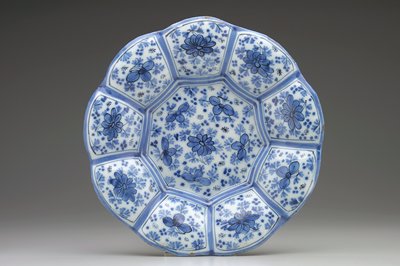
Dish
- Medium
- Tin-glazed earthenware
- Dimensions
- 2 1/4 x 12 x 12 in. (5.7 x 30.5 x 30.5 cm)
- Genre
- Ceramics
Tags
netherlands
About
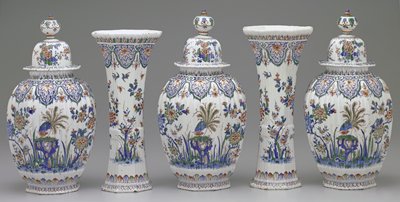
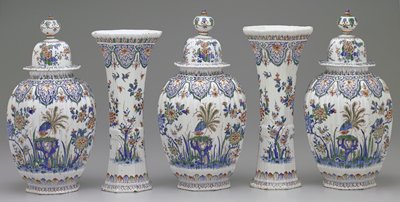
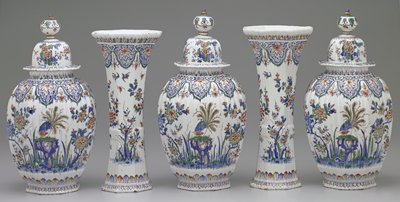
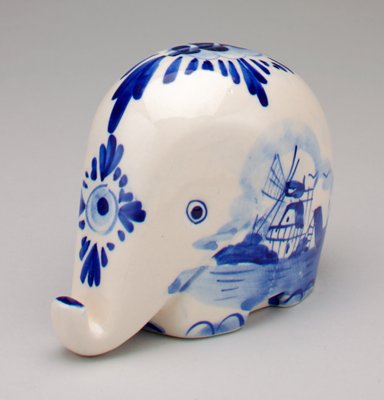
The Dutch East India Company, founded in 1609, imported into Europe large quantities of Chinese porcelain, usually with bright blue-and-white floral patterns. Such thin, translucent porcelain was unknown in Europe at this time and became highly prized for its rarity and decorative qualities. Envious of this flourishing trade, Dutch potters soon began producing imitations of Chinese porcelain by painting pottery with similar motifs, as well as with images of European landscapes and biblical stories. The city of Delft in the Netherlands became an important center for this type of glazed earthenware.