Marcella Counterpane
- Medium
- Cotton, woven quilting
- Dimensions
- 85 1/2 x 79 1/2in. (217.2 x 201.9cm)
- Genre
- Textiles
Tags
England
About
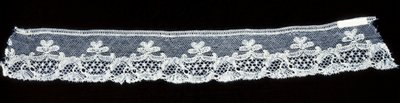
After several centuries of colorful embellishment on bed covers, white bedroom furnishings became fashionable in England by the late eighteenth century. French needleworkers had developed a technique known as Marseilles work which involved embroidering intricate, white designs on a white ground, then quilting them to a second layer of fabric and stuffing them with batting to produce a raised effect. Coverlets made in this style were much admired in England, but were difficult to obtain and very expensive to purchase. In 1763, British weaver Robert Elsden developed a process that successfully emulated Marseilles work. His invention, woven quilting, is a type of double weave that can be produced quickly and inexpensively on a commercial loom. The name changed in popular usage, and by mid-nineteenth century, Marcella counterpanes, such as this one, were readily accessible to middleclass English households.