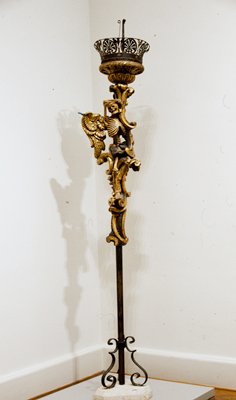
Funeral torch
Italy
1720
- Medium
- Gilded and painted wood and wrought iron
- Dimensions
- 112 1/2 x 22 x 20 in. (285.75 x 55.88 x 50.8 cm)
- Genre
- Sculpture
Tags
Italy
About
A funerary torch is a symbol of life in a ritual commemorating death. This torch would have accompanied a catafalque: a large, architectural structure that displays the coffin of an important person in catholic funeral rites. Catafalques were used primarily in catholic European cities from the 16th to 19th centuries, though they are still used on occasion for large, public funeral rituals, such as those for the pope. The presence of a torch as a symbol of life, though seemingly contradictory to a funerary setting, visually reinforces the idea of resurrection held sacred in Catholic beliefs about death. The complex relationship between life and death is repeated consistently throughout the decoration of this torch. The pomegranate motif on the top tier of the torch is a symbol for Christ’s resurrection. On the shaft of the torch, a gilded skeleton with ornate, feathered wings - an angel of death- entwines around arabesque curves; a dance in which life and death exist harmoniously together.