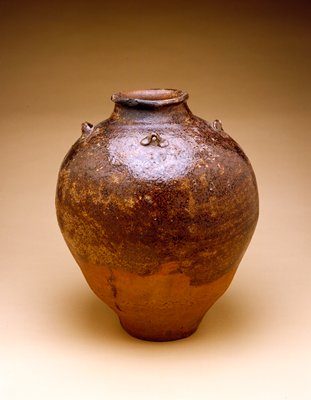
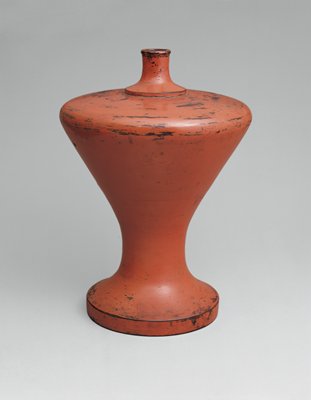
Tea leaf storage jar
- Medium
- Tanba ware, stoneware with applied and natural ash glaze
- Dimensions
- 16 x 13 1/2 in. (40.64 x 34.29 cm)
- Genre
- Ceramics
Tags
Japan
About
After tea leaves are picked and dried in spring, they are placed in tightly sealed stoneware jars and stored in cool, dry places (such as in the mountains or underground) to protect the tea from the heat and humidity of summer. The high neck of such storage jars was designed to receive a stopper, which would have been lashed to the vessel with a cord threaded through the four lugs (loops). During special mid-autumn tea gatherings called kuchikiri no chaji (mouth-cutting tea gathering), the jar’s seal is broken, and guests are invited to enjoy the marvelous fragrance of the freshly opened tea. While guests then eat a formal, multicourse meal, the tea is ground into a fine powder using small stone mills set up in the preparation areas (mizuya) adjoining the tearoom.
![Untitled [autumn flowers and grasses]](https://1.api.artsmia.org/37340.jpg)
![Netsuke [Actor with Fox Mask]](https://1.api.artsmia.org/31605.jpg)