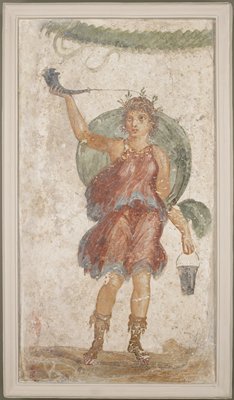
Figure of a Lar
- Medium
- Fresco
- Dimensions
- 33 3/4 x 18 1/2 in. (85.73 x 46.99 cm)
- Genre
- Paintings
Tags
Italy
About
This fresco panel, excavated from the Roman city of Pompeii—destroyed by Mount Vesuvius in 79 CE and only rediscovered in 1748—once adorned a household shrine, or lararium. It depicts a Lar, a youthful household deity who safeguarded a family’s hearth and well-being. The god pours wine from a drinking horn (rhyton) into a wine bucket (situla), symbolizing offering and protection. Painted in fresco—a technique in which pigments were applied to wet lime plaster—its colors bonded permanently with the wall, ensuring the image remained vibrant and integral to the shrine’s sacred space.