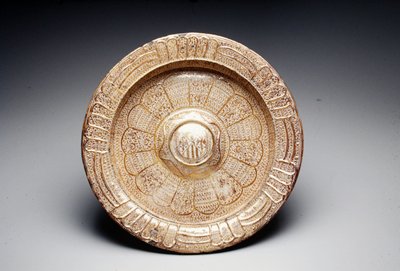
Deep basin
Spain
1450
- Medium
- Glazed ceramic, lustre
- Dimensions
- H.3-1/2 x Dia.18-7/8 in.
- Genre
- Ceramics
Tags
Spain
About
This deep, round basin with dense, curvilinear decoration was made in the thriving ceramic center of Manises in the Valencia region of Spain. There, the master potters were Mudéjars, Muslim residents who remained in the Iberian Peninsula (present-day Spain and Portugal) after the collapse of the Umayyad dynasty (756-1031 CE) and retained a monopoly on the complex lustreware ceramic technique. Their wares were sought after by noble and royal houses throughout Europe, evidenced by this commission, with the coat of arms symbolizing the union of the Catholic Kingdoms of Aragon and Sicily.