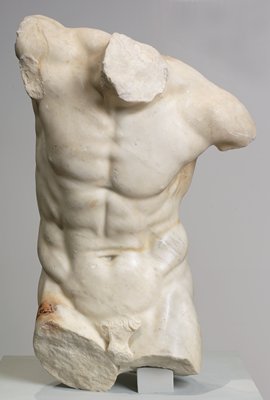
Torso of a Dancing Faun
- Medium
- Marble
- Dimensions
- 26 x 15 3/8 in. (66.04 x 39.05 cm)
- Genre
- Sculpture
About
This muscled male torso, with a small tail and twisting pose, is the remnant of a dancing faun. The statue type is known from around 40 surviving ancient Roman copies after a Greek prototype and from ancient coins depicting the sculpture which help us reconstruct the work’s original appearance. This faun would have had tiny horns above his forehead and a kroupezion, or clapper, worn on his foot. His raised right hand and lowered left probably held cymbals, although variants also show him holding hands with dancing figures or tugging at nymphs’ drapery. These lustful woodland creatures, followers of Dionysus, the god of wine, lived freely in wild inebriation. They are often represented in frenzied states of music making and dance, as here, with the chiseled body captured in rotating movement.