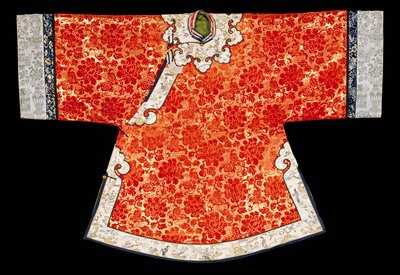
Chinese Woman's Unofficial Informal Robe
- Medium
- Cut-silk velvet
- Dimensions
- L.39-1/4 in.
- Genre
- Clothing
Tags
China
About
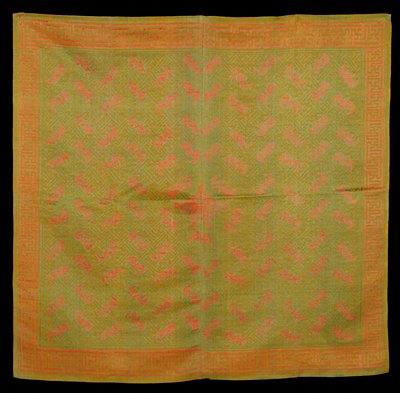
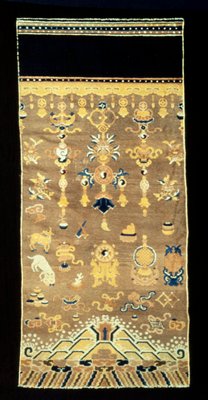
In China, different ethnic groups favored different styles of robes. The ethnic minority Manchu women wore full-length informal gowns with square cuffs, and women of the Han majority wore shorter, loose-fitting robes with wider sleeves like this one. These were generally calf-length garments worn over a standard wraparound skirt. This special-occasion robe features a scattered scheme of peonies and cicada insects in red cut velvet against a gold ground. The cicada symbolized regeneration and eternal youth. When depicted in flower or garden settings, it represented the harmonious coexistence of all things in nature. The outer cuff bands display, in light-green cut and voided velvet, the “hundred antiques” motif—a general collection of emblematic forms comprising the Buddhist Eight Treasures, the symbols of Four Fine Arts (music, chess, calligraphy, and painting), and numerous conventional representations of sacrificial vessels, flowers, and animals. The 12-petal yoke and the side and hem bands are embroidered with women in a multicolored landscape on a white ground.