Cinerary Box with Cover
- Medium
- Marble
- Dimensions
- 18 3/4 x 11 1/2 x 7 3/4 in. (47.63 x 29.21 x 19.69 cm)
- Genre
- Sculpture
About
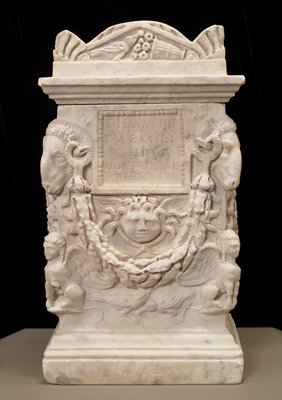
This ancient urn once contained the ashes of Decimus Aemilius Chius and Hortensia Phoebe, who are named in the dedicatory inscription. Their relationship is not described, but it is thought that they were husband and wife, and their Greek surnames suggest they once had been enslaved but later gained their freedom. The frontal relief includes a range of ornamentation and emblems. The Gorgon head and sphinxes are symbols of protection. The garlands of laurel, an evergreen, allude to immortality, while the pecking birds evoke an idyllic natural setting. Rams’ heads were a popular funerary motif; they referred to the practice of sacrificing the animal to the gods of the underworld and were also connected to ancient ancestor cults. This work was reassembled from fragments at an unknown date. Part of the right posterior corner of the base is a replacement. The gabled lid was probably carved in the 17th century.