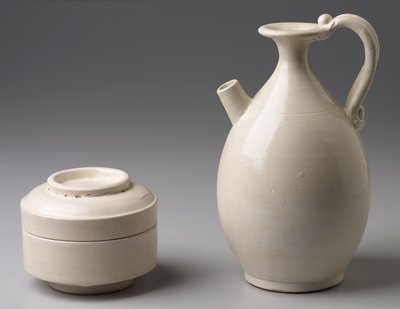
Ewer
- Medium
- Porcelaneous stoneware with clear glaze
- Dimensions
- 8 5/8 x 5 1/4 x 4 7/8 in. (21.9 x 13.3 x 12.4 cm)
- Genre
- Ceramics
Tags
China
About
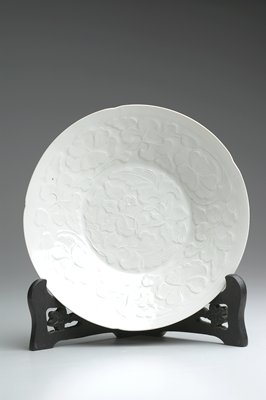
This well-preserved ewer and accompanying covered bowl were reportedly discovered together in the same tomb. They represent the popularity during early Tang for high-fired white wares made in North China at sites like Gongxian in Henan province. Both vessels rely on rather simple shapes and clear even glazes for aesthetic effect. The straight-sided bowl has a cover with foot-rims that can be used as an attendant saucer. Its shape, with indented corners, is likely derived from vessels made in silver.