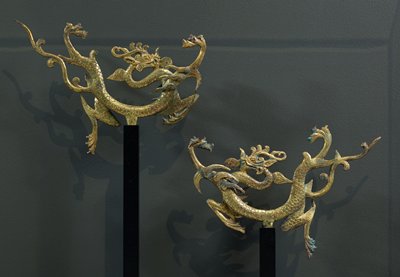
Flying Dragon, one of a pair
- Medium
- Gilt bronze
- Dimensions
- 6 9/16 x 9 1/2 x 1 in. (16.7 x 24.1 x 2.5 cm)
- Genre
- Sculpture
Tags
China
About
This pair of dragons are in a sinuous S-shape, with scaly bodies and tendrils curved in one direction, indicating the dragons are flying in the wind. At the mouth of each dragon is a circle, symbolizing a jewel. Dragons began to be frequently depicted chasing auspicious jewels (known as Chintamani) after the introduction of Buddhist art to China. We don’t know exactly where this pair of dragons came from, but they seem to have served as a part of a larger sculpture. The liveliness of the form reflects the cosmopolitan culture of the Tang dynasty, which absorbed many influences beyond China.