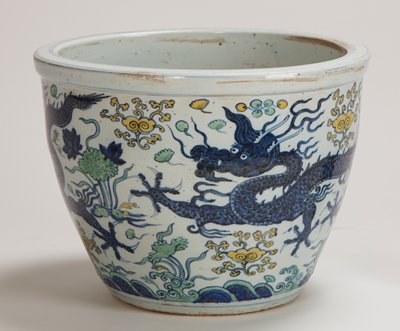
Imperial Fish Bowl
China
1573
- Medium
- Doucai ware Porcelain with underglaze blue and overglaze enamel decor
- Dimensions
- H.12 x Dia.15-1/2 in.
- Genre
- Ceramics
Tags
China
About
Large and sturdily potted with a thick rim, this deep bowl probably functioned as an imperial fish tank (kang) or possibly as a jardinière for potted plants. The Ming period is distinguished in ceramic history for the introduction of new in-glaze color combinations and the use of overglaze enamels. The terms wu ts'ai (five-color) and tou-ts'ai (joined colors), were used loosely to mean polychrome or multiple-color ware. A tou-ts'ai pattern such as this one has its overglaze colors applied to a design outlined in underglaze cobalt oxide blue. Imperial marked porcelains indicate that Tou-ts'ai wares were first manufactured during the Xuande reign (1426-35). Decorated with a magnificent imperial five-claw dragon, this bowl bears a six-character Wanli reign mark (1573-1619), indicating that it was made on imperial order possibly at the great imperial factory at Jingdezhen. The dragons on this basin are pursuing large yellow springs of ling-chih, the fungus of immortality. The lotus plants symbolize harmony and the entire image conveys the wish of extended good fortune for the empire.