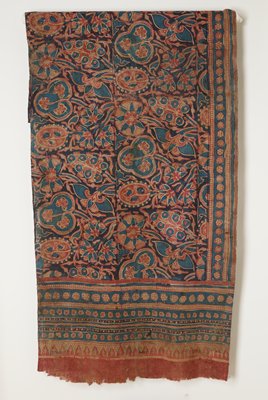
Textile panel
- Medium
- Cotton
- Dimensions
- 76 3/4 × 33 1/16 in. (195 × 84 cm) (approx.)
- Genre
- Textiles
Tags
India, Indonesia
About
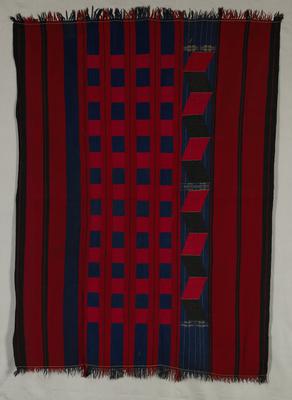
This cloth is radiocarbon dated to 1347-1467; it was created in Gujarat on handwoven cotton and features two bands of block-printed flowering trees and bushes, further hand-drawn, resist and mordant dyed, and the background over-dyed with red and indigo for a lush, purple ground. The cloth was manufactured for export, primarily to the Toraja region of Sulawesi where the flower design was called daun bolu, referencing the leaf of sirih plant, a key ingredient in chewing betel. There, it would have been used as a ceremonial banner, displayed at auspicious occasions and otherwise kept with a family’s pusaka, or sacred heirlooms cloth (radiocarbon dated 1340+/-40 years) was recovered from burial sites in Fustat, just south of the trading crossroads of Cairo.