Swineherd
- Medium
- Etching
- Dimensions
- 1 7/16 × 3 1/8 in. (3.65 × 7.94 cm) (plate) 6 3/16 × 8 15/16 in. (15.72 × 22.7 cm) (sheet)
- Genre
Tags
france
About
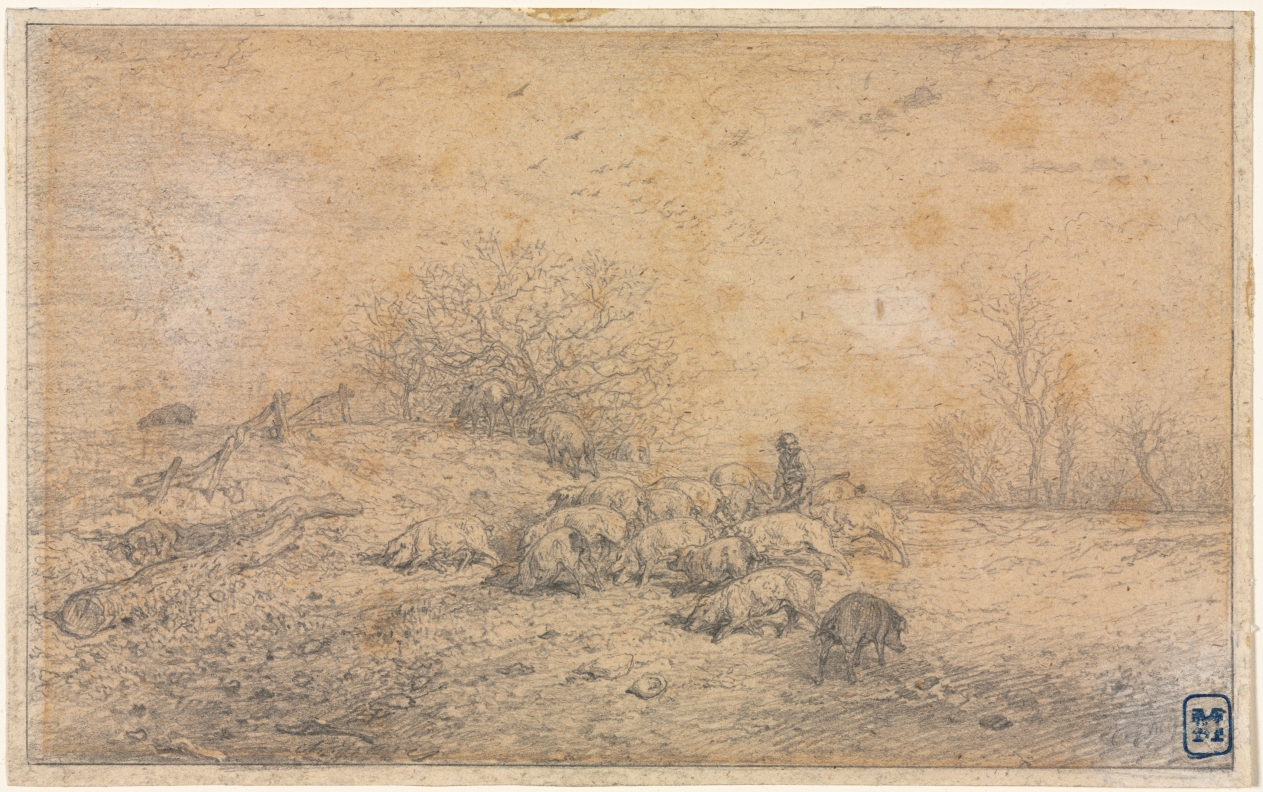
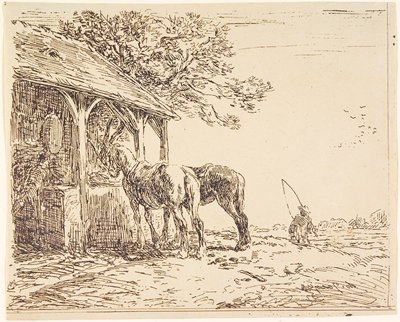
Charles Emile Jacque and his friend Jean François Millet moved to the village of Barbizon, about twenty miles south of Paris, in 1849. They were fleeing the revolutionary unrest and rampant cholera of the capital city. In their new rural surroundings they found inspiration in laborers and their flocks, making them the focal point of their art while also leaving them anonymous. They and like-minded artists became known as the Barbizon School. Jacque was also a leader in reviving interest the sketch-like use of etching as a way of making artistic prints. His work evokes the spirit of Dutch etchers of the 1600s, such as Rembrandt and Adriaen van Ostade. In this tiny print he portrays a weary swineherd accompanying his flock across an expansive landscape.