Serape
Saltillo artist
1900
- Medium
- Cotton, pigments
- Dimensions
- 45 1/4 × 28 7/8 in. (114.94 × 73.34 cm)
- Genre
- Textiles
Tags
Mexico
About
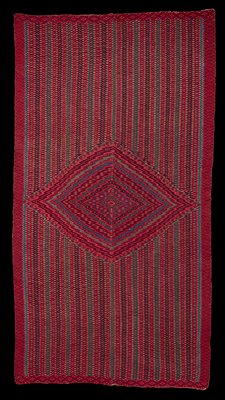
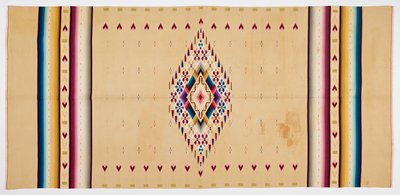
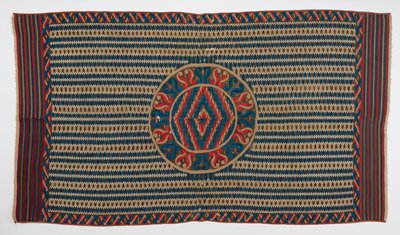
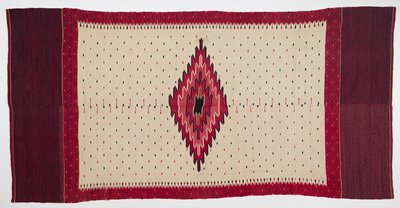
The serape is among the finest and most vibrant North American textile traditions. Produced as early as the 1500s, the serape has since undergone different styles and remains a popular item today. Despite its prominence in Mexican culture, relatively little is known about the textile’s origins and history. This textile’s production required great skill: until the early–mid 1900s, the serape was made up of two panels, each woven on a narrow loom, and then stitched together. To create the illusion of a single piece, the two panels had to be mirror images of each other. Serapes have long been used in a variety of ways, as rugs, shawls, wall hangings, saddle blankets, and, when featuring a neck slit, ponchos. By the 1880s the serape displayed distinct regional styles in Mexico and was highly sought after by American tourists. The serape also became a source of inspiration for Navajo and Rio Grande weavers, and imitations of the textile were printed and sold in Germany.