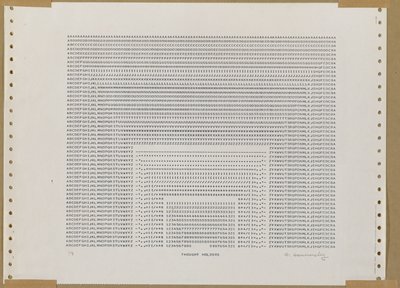
THOUGHT HOLDERS
- Medium
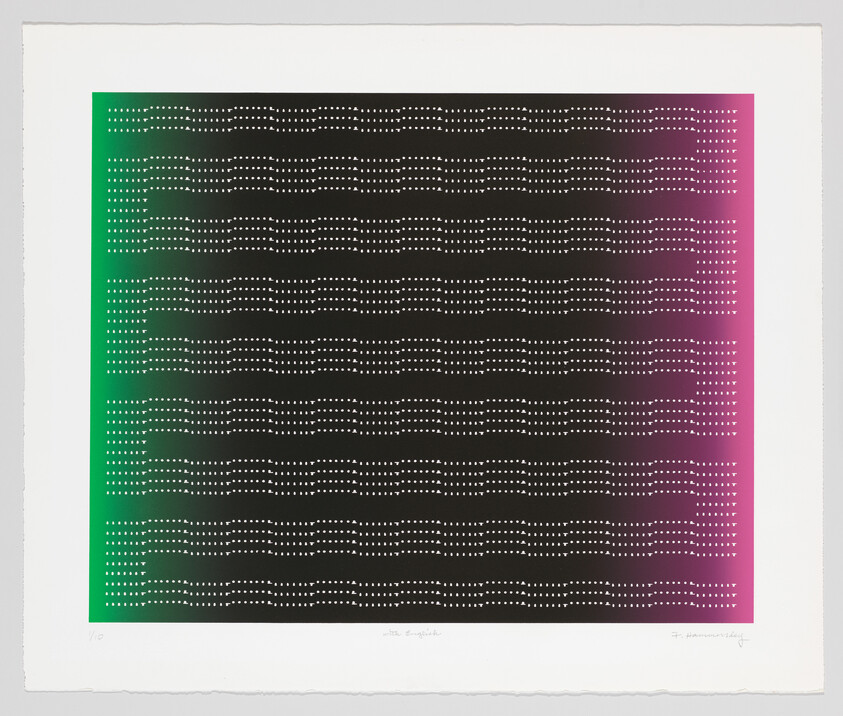
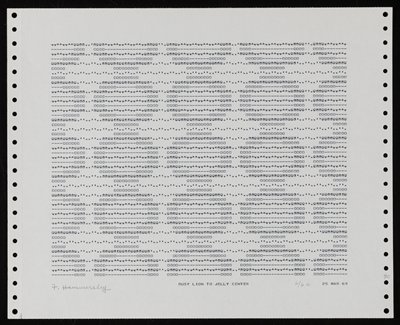
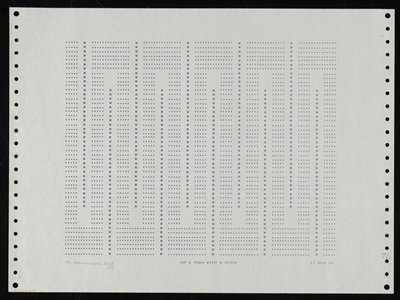
- Computer-generated drawing on paper
- Dimensions
- 11 × 14 7/8 in. (27.94 × 37.78 cm) (sheet, as folded)
Tags
United States
About
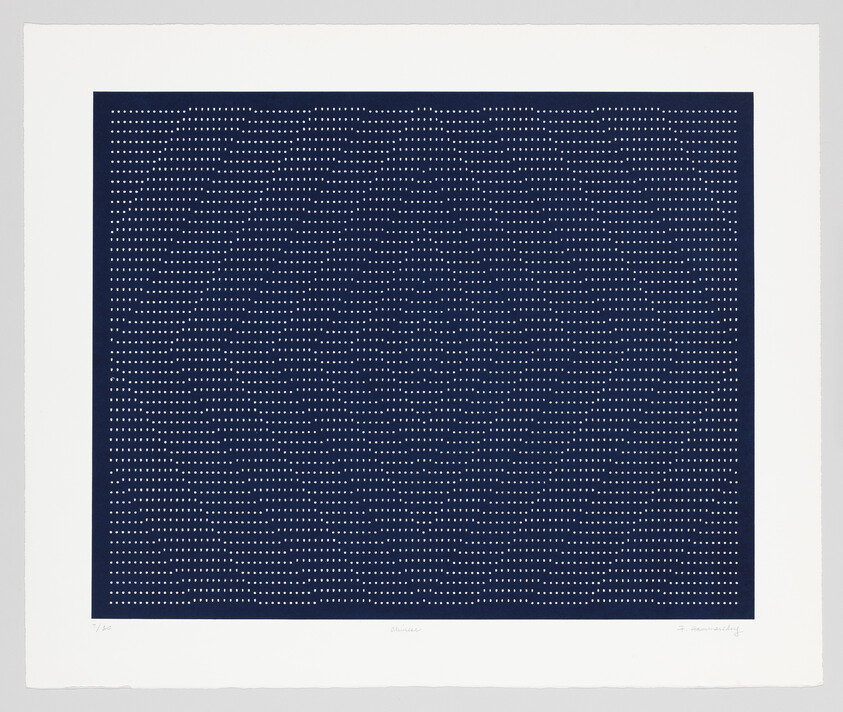
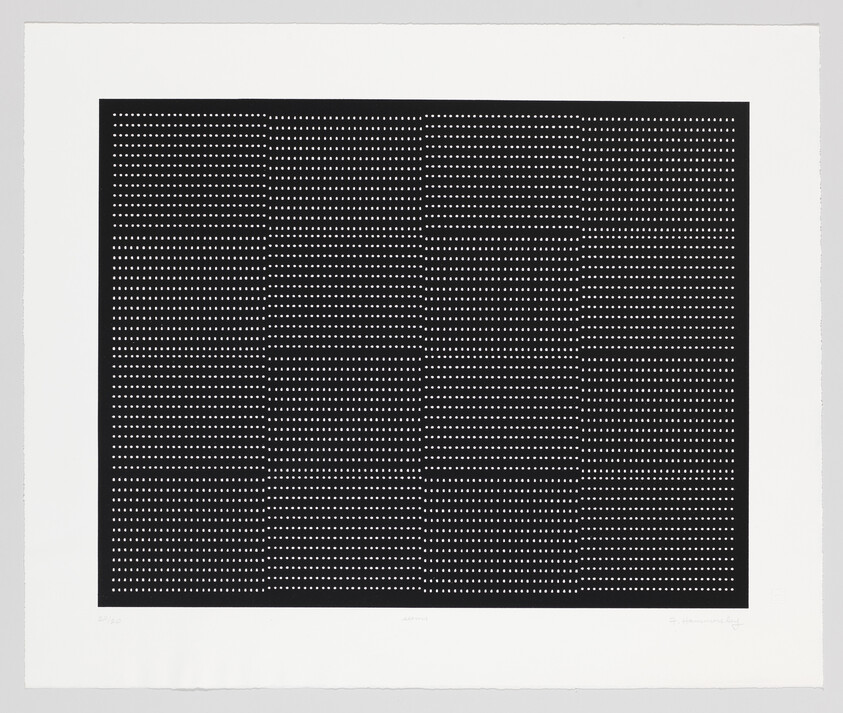
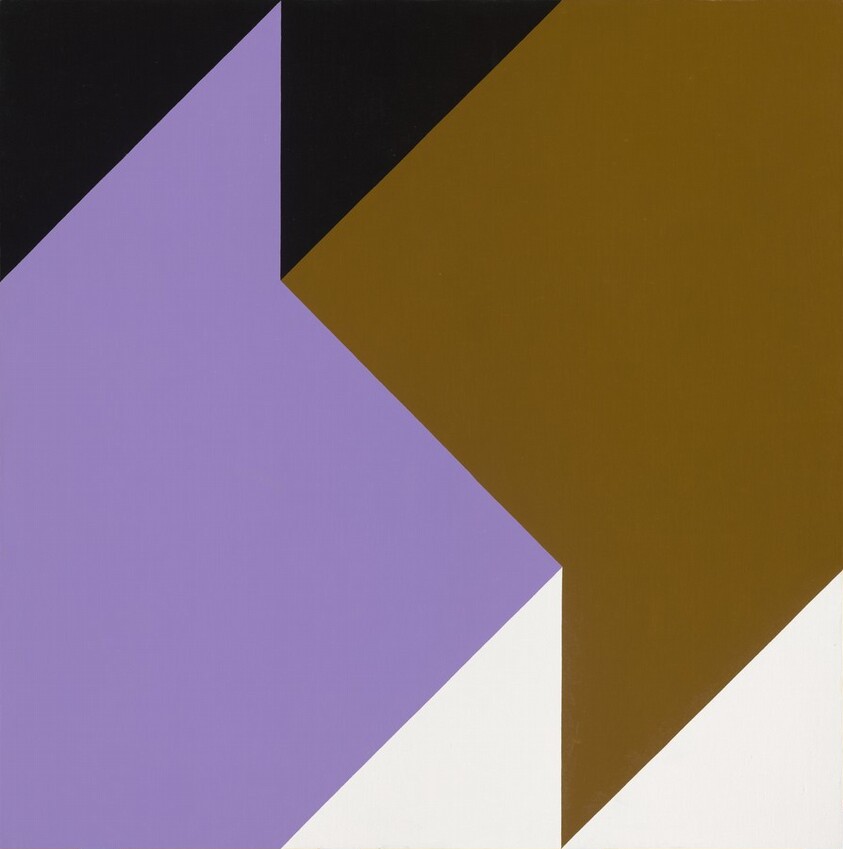
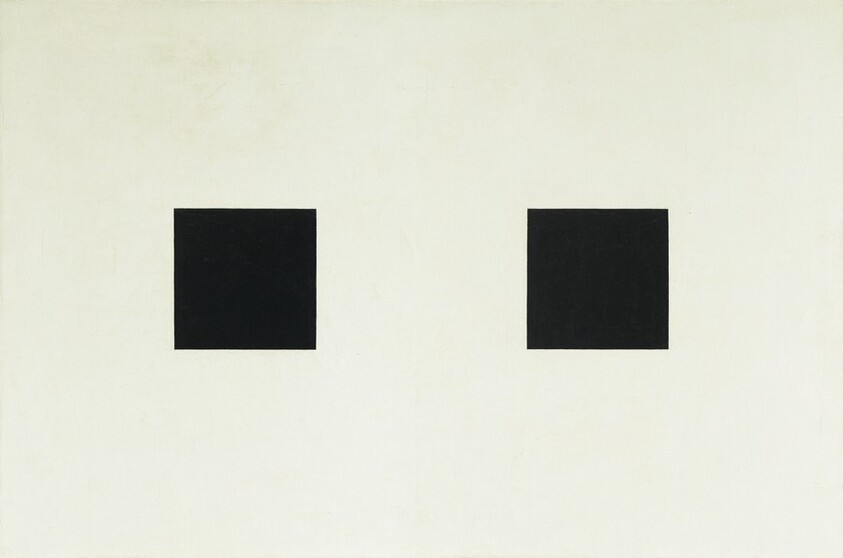
In 1969, while teaching at the University of New Mexico, Frederick Hammersley began a year-long experiment making abstract drawings with the aid of a mainframe computer and line printers. At the time, computer-generated art was still in its infancy, and his efforts were groundbreaking and favorably received by critics and peers. Members of the University’s computing department assisted Hammersley in producing his drawings by programing the department’s computer to compose images from modified text and numerical elements. Simple and disarmingly playful, Hammersley’s computer drawings were part of a wave of postwar creative experimentation with emergent technology.