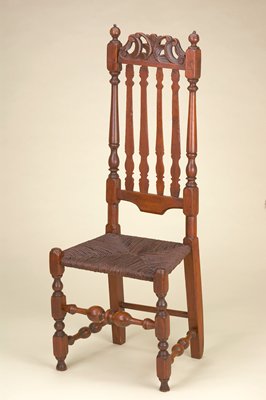
Bannister-back side chair
- Medium
- Maple and oak with rush seat
- Dimensions
- H.47-3/8 x W.17-15/16 x D.14-1/8 in.
- Genre
- Furniture
Tags
United States
About
The banisters that make up the back of this chair were split in half after they had been turned on a lathe. The bannisters' flat side faces the front, where they would meet the sitter's back, and rounded side faces the rear. The manufacturing method was more labor-intensive than simple ladder-back chairs with horizontal back splats, yet less costly than their leather-upholstered or caned contemporaries. This chair descended in the family of the original owners, and was brought to St. Cloud, Minnesota by the Staples family in the 1850s.