Wildeview
John Wilde
1985
- Medium
- Lithograph
- Dimensions
- 23 7/16 × 35 3/4 in. (59.53 × 90.81 cm) (sheet)
- Genre
Tags
United States
About
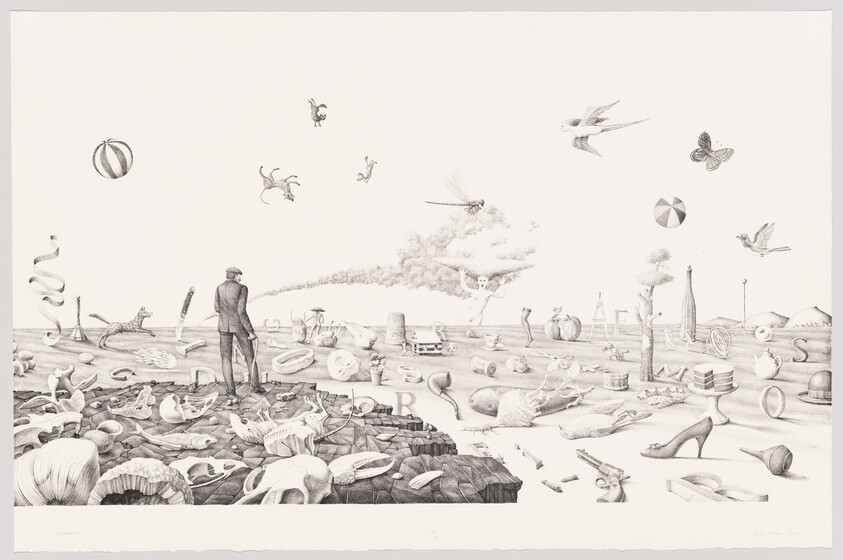
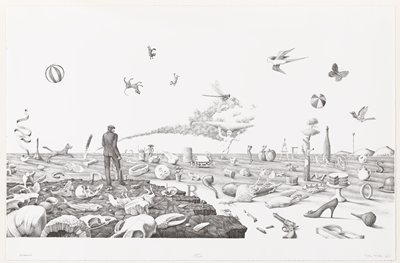
John Wilde’s Wildeview is essentially a self-portrait in the guise of a surrealistic environment. Wilde draws himself into the composition at the lower left, a standing figure, cane in hand, surveying an expansive, dream-like landscape of figures, creatures, objects, and activities that defy the norms of daily life. The seasoned veteran surveys the metaphorical landscape of his life. Though their precise meaning may be ambiguous, the scene’s various elements suggest a retrospective catalogue of people, events, and ideas that informed Wilde’s work as a surrealist. Letterforms scattered across the landscape spell out such names as Dürer, Ingres, and the Florentine Renaissance painter Piero di Cosimo, all artists Wilde deeply admired. Other references include objects or motifs associated with Bosch, Magritte, Dali, and Max Ernst. By invoking the names of great artists of history, Wilde aligns himself with the centuries-long tradition of artists who devoted their lives to the fine arts of painting, drawing, and printmaking.