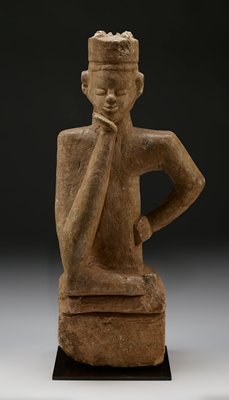
Ntadi figure
- Medium
- Stone
- Dimensions
- 23 1/8 × 10 3/4 × 6 in. (58.74 × 27.31 × 15.24 cm)
- Genre
- Sculpture
Tags
Democratic Republic of the Congo
About
The stone used for this sculpture is relatively soft, so the artist could carve it almost as easily as wood. The figure was placed outside to demarcate the land of a clan, embellish the grave of a chief, and celebrate the legacy of the past. It represents a chief, recognizable by his hat, which once displayed four leopard claws (now missing), and his pensive pose—known as fumani, or “thinker of sad things”—which symbolizes wisdom, thoughtfulness, and authority.