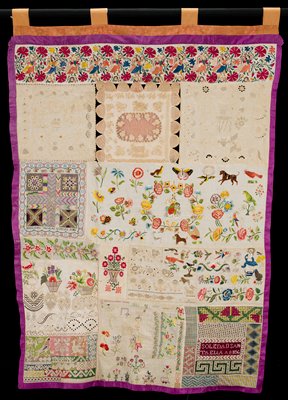
Wall hanging with embroidered samplers
- Medium
- Linen, cotton, silk, metal sequins, metallic threads, glass beads, pigments
- Dimensions
- 70 7/16 × 50 in. (178.91 × 127 cm) (including top tabs)
- Genre
- Textiles
Tags
Mexico
About
This hanging is composed of nine Mexican samplers collected and stitched into this arrangement in the early 1900s. Inscriptions throughout name some of the embroiderers—Rosaura Munoscano, Emiliana Alcazar, and Soledad Santaella—and date the manufacture of the embroideries from 1810 to 1861. Samplers are embroidered textiles that included a “sampling” of stitches and motifs that served as either a proof of the embroiderer’s skill, or a record of images and techniques to which she would refer over time. Some of the motifs on these samplers reveal the legacy of the Spanish empire in Mexico, as in the double-headed eagle which derived from the royal heraldry of the Spanish Habsburgs. Catholic imagery such as the Lamb of God, a haloed Virgin Mary, and the monograms of Mary (AMR, from Ave Maria Regina, or Hail Mary, the Queen) and Jesus (JHS, from Jesus Hominum Salvator or “Jesus, savior of men”) also appear throughout.