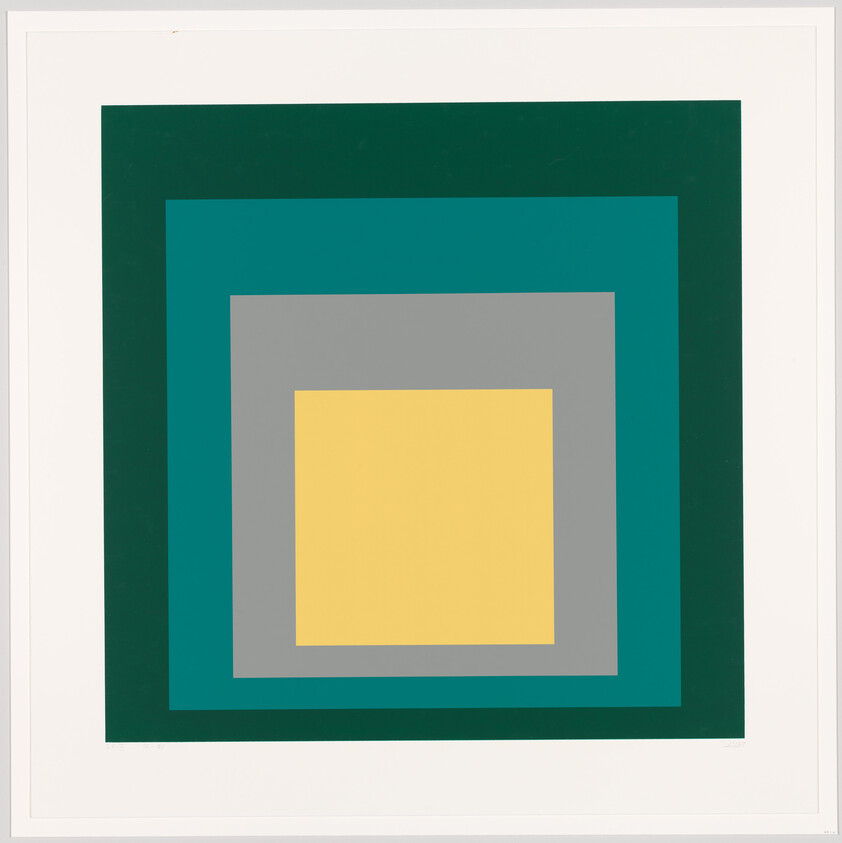
SP-VIII
Josef Albers
1967
- Medium
- Color screenprint on card
- Dimensions
- 19 9/16 × 19 5/8 in. (49.69 × 49.85 cm) (image) 23 15/16 × 23 15/16 in. (60.8 × 60.8 cm) (sight) 24 9/16 × 24 9/16 × 1 in. (62.39 × 62.39 × 2.54 cm) (outer frame)
- Genre
Tags
United States
About
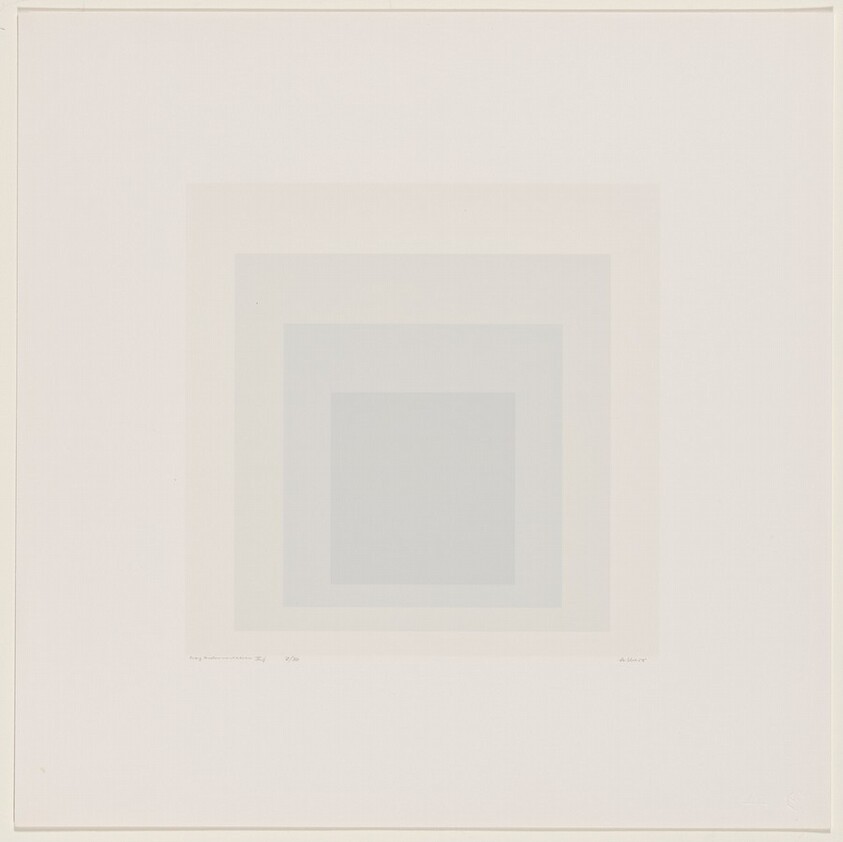
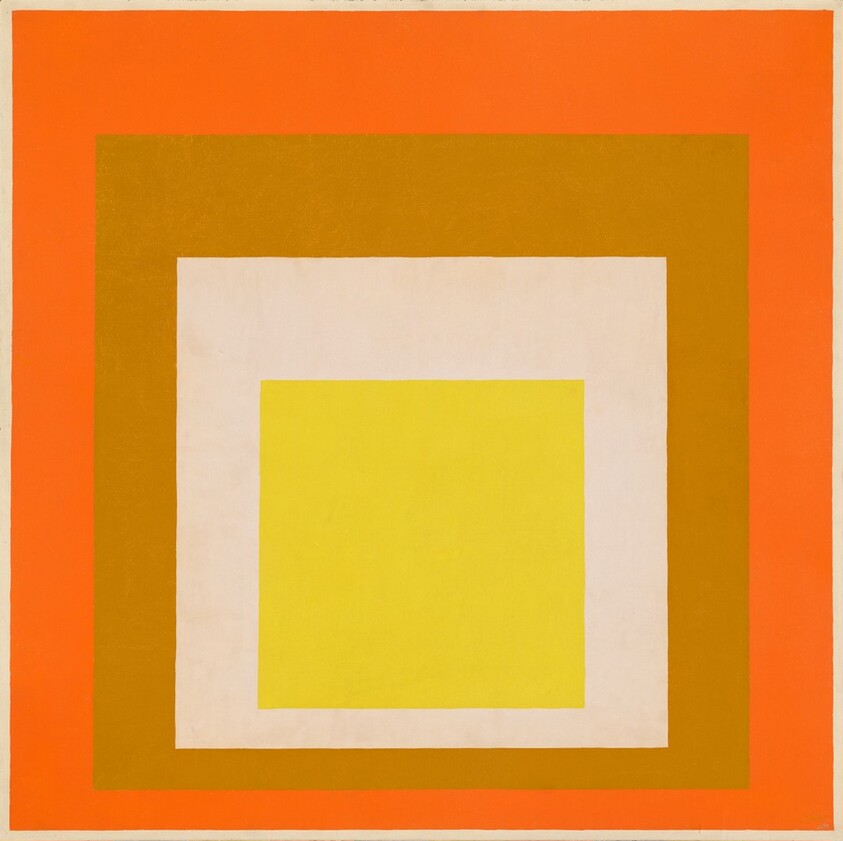
Josef Albers taught modernist art theory at Germany's Bauhaus until the Nazis forced its closure in 1933. He then left for America, where he continued his teaching and investigations into the interaction of colors. Around 1950, he began his Homage to the Square series, which preoccupied him for the rest of life. In more than one thousand paintings, prints, drawings, and tapestries, he studied the effects that adjacent colors have on one another and the illusions of space such juxtapositions could produce. All the compositions feature squares, which appear to be stacked or nested, as seen in this screenprint, which comes from a portfolio of twelve published in 1967. Though he had scientific goals for his work, its great popularity was due to its kinship with the hard-edged abstraction and op-art that followed in Albers's wake.