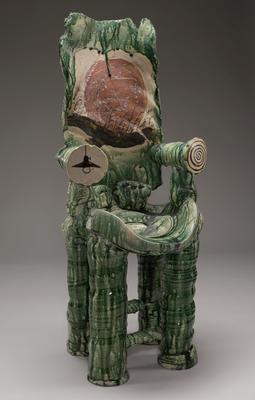
Chair
Suzuki Gorō
2000
- Medium
- Stoneware with Oribe glaze
- Dimensions
- 45 11/16 × 20 1/4 × 22 7/16 in. (116 × 51.5 × 57 cm)
- Genre
- Ceramics
Tags
Japan
About
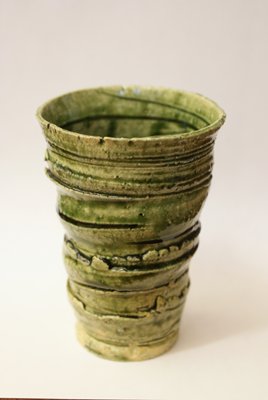
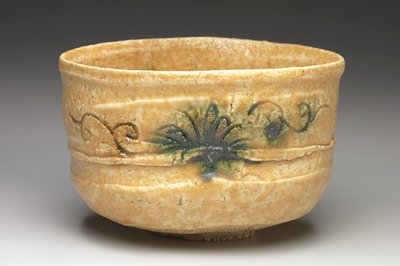
Suzuki Gorō has long been inspired by Japanese pottery from the Momoyama period (1573–1603), especially that era’s most famous wares like Yellow Seto, Black Seto, Shino, and Oribe, all of which were produced in the Mino region of central Japan, a traditional center for the production of pottery. Although Suzuki uses many of the glazes that characterize these traditional wares, his remarkable clay forms diverge greatly from tradition. These include fanciful teapots, vases, boxes, and tea bowls, as well as chairs such as this one, which is covered in green Oribe glaze and also decorated with pictures on front and back.