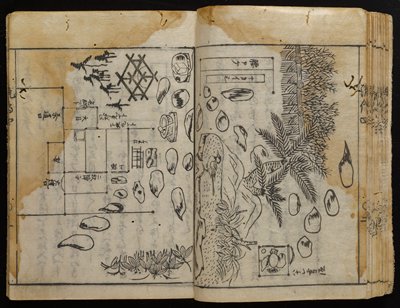
Promulgation of the Contemporary Tea Ceremony, vol. 3–4
Endō Genkan
1694
- Medium
- Woodblock printed book, ink and color on paper
- Dimensions
- 8 3/4 × 6 3/8 × 3/4 in. (22.23 × 16.19 × 1.91 cm) 8 7/8 × 6 3/4 × 2 1/16 in. (22.54 × 17.15 × 5.24 cm) (all volumes with case)
- Genre
- Books & publications
Tags
Japan
About
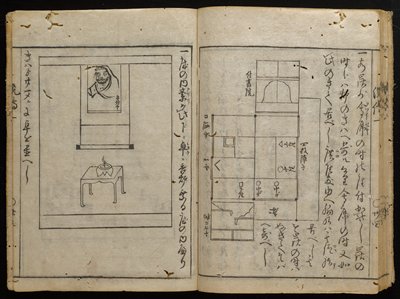
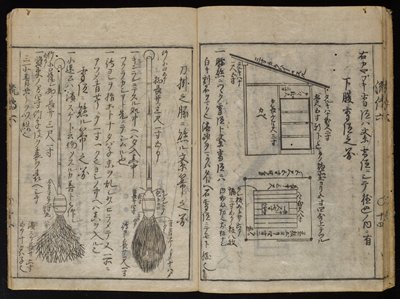
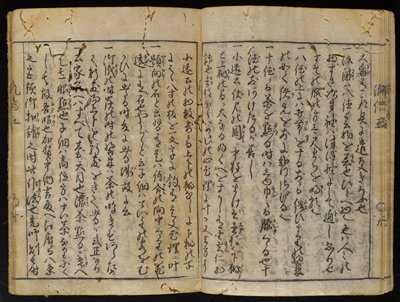
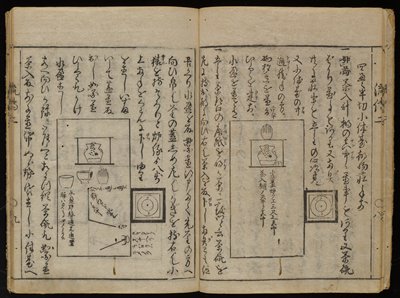
Contemporary guide to tea ceremony, Enshū school. In the mid-1600s, an aristocrat named Kobori Enshū (1579–1647), who was also a skilled poet, artist, flower arranger, and tea master, developed his own style of the tea ceremony based on the aesthetic ideal of kirei-sabi, which combined the notions of refined beauty (kirei) and patina, the wear associated with age (sabi). Enshū’s kirei-sabi style, which partially supplanted wabi (imperfect or rustic) as the dominant aesthetic, had a great impact on the design of gardens and teahouses, decoration of teahouse interiors, and the production of tea wares in the mid-1600s. Two generations later, Endō Genkan, an adherent of the Enshū School of tea, wrote a number of important books on the Japanese tea ceremony including the volumes displayed here, which sought to disseminate Enshū’s kirei-sabi tea aesthetic.