Return
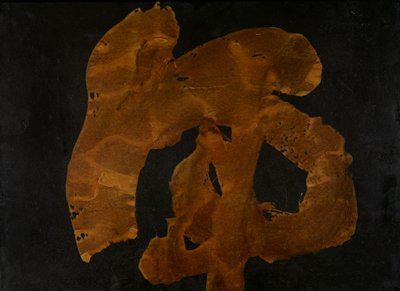
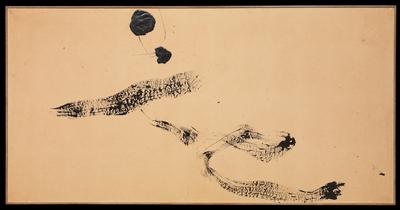
Morita Shiryū
1961
- Medium
- Ink on paper
- Dimensions
- 34 3/4 × 68 × 1 in. (88.27 × 172.72 × 2.54 cm) (outer frame) 34 1/4 × 67 3/4 in. (87 × 172.09 cm) (image)
- Genre
- Calligraphy
Tags
Japan
About
Morita Shiryū revolutionized the conventional perception of Japanese calligraphy into a global avant-garde aesthetic. His artistic breakthrough was in the mid-1950s but it was not until the 1960s when his creativity began to be recognized more widely, and eventually internationally. In Morita’s oeuvre is a total of 16 known versions of the character kan 還, which according to the artist means to “return to the original source.” It is a recurring theme in his choices of Chinese characters to express one’s inner self; a state of mu (nothingness) which is, according to Zen Buddhism belief, inherent to human nature. In this case he is referring to returning to this “original source” of nothingness.