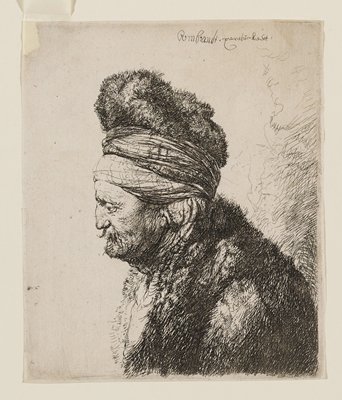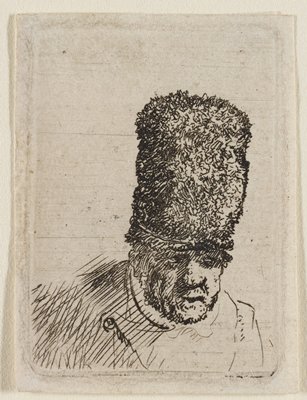
Head of an Old Man in High Fur Cap: Bust
- Medium
- Etching and burin
- Dimensions
- 1 15/16 × 1 1/2 in. (4.92 × 3.81 cm) (sheet)
Tags
netherlands
About
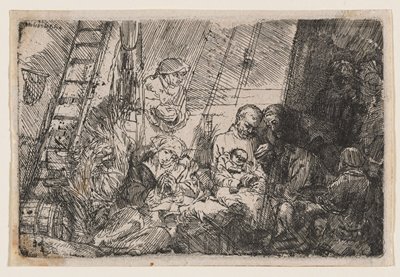
With well-placed scratches, Rembrandt conjured the illusion of fur in the space of a thimble. He loved using headgear to confer identity on his subjects, like this ruddy fellow leaning in to hear some tale he promises to keep under his hat. The fur could be marten or polecat—one of the humbler native furs the Dutch wore to keep warm. In 1631, Rembrandt put a similar hat on a bystander in Simeon’s Song of Praise (Mauritshuis, The Hague). The lines etched on the shoulder were probably added by a follower.