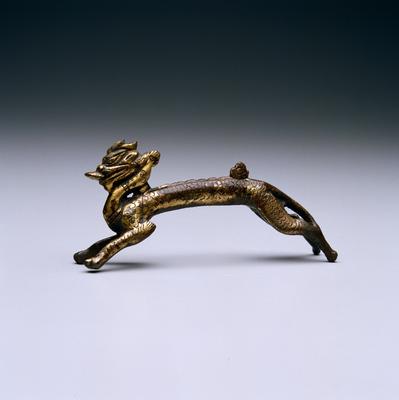
Dragon
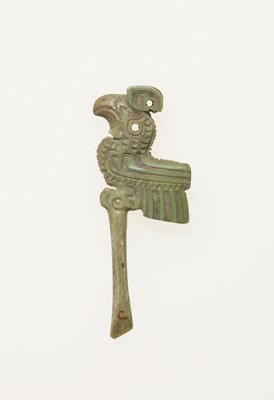
- Medium
- Gilt bronze
- Dimensions
- 1 7/8 x 4 1/16 x 15/16 in. (4.76 x 10.32 x 2.38 cm)
- Genre
- Metalwork
Tags
China
About
The Emperor Xuanzong of the Tang dynasty (r. 713–56) was a fervent enthusiast of the Daoist belief system, which holds specific mountains and rivers to be sacred. Every year, the emperor dispatched envoys of ranking officials and eminent Daoists to the sacred mountains and rivers to perform a rite called tou longjian (tossing dragons and tallies). In order to communicate with gods there, they tossed cast-metal dragons—accompanied by tablets inscribed with prayers for the dynasty’s welfare and the immortality of the emperor—into these holy sites. This gilt-bronze dragon was likely cast for such a purpose, a practice that continued until the 900s.