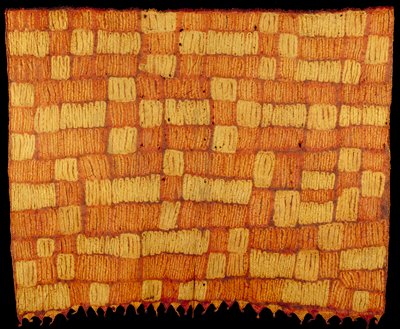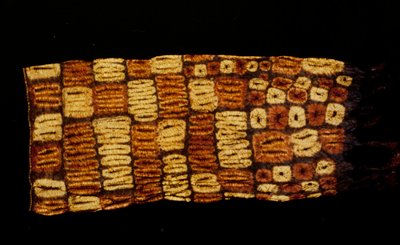
Woman's skirt
- Medium
- Raffia, oblique interlacing, resist tie-dye and stitched-resist dye
- Dimensions
- 33 1/2 x 15 11/16 in. (85.09 x 39.85 cm) (without fringe)
- Genre
- Textiles, clothing
Tags
Côte d'Ivoire
About
The Dida of Côte d'Ivoire produce some of the most striking and unique textiles found in Sub-Saharan Africa. Using the unusual technique of oblique interlacing, Dida artisans painstakingly plait up to 1, 500 strands of raffia into a long, narrow tubular form. When the garment is completed, it is embellished with intricate, bound and stitched-resist dye techniques in repeating patterns of rectangles, circles and elongated ovals. Because of the complexity of their production, these objects were very costly to acquire and were seen as indicators of wealth and status within Dida society. They were worn or displayed at ritual occasions such as marriages, natal celebrations or funerals of important people. Today, very few Dida continue to produce these textiles, and examples remaining in the culture are highly prized.