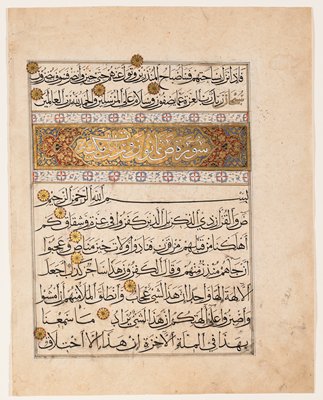
Page from the Koran
Egypt
1350
- Medium
- Ink, opaque watercolor, and gold on paper
- Dimensions
- 15 9/16 x 12 in. (39.53 x 30.48 cm) (image, sheet)
- Genre
- Manuscripts
Tags
Egypt
About
This exquisite manuscript page typifies the artistic and technical virtuosity accorded illuminated books during the Mamluk period (1250-1517). By the 13th century, more cursive writing styles had replaced kufic as the preferred Koranic script. The main body of the text is written in a cursive style commonly called muhaqqaq script, characterized by tall, slender verticals and sweeping sublinear strokes. The chapter heading, framed in gold and vegetal ornamentation, is in thuluth script. Sultans and amirs commissioned mostly large Korans for the specific mosques and religious foundations they endowed. Multi-volume Korans were popular during the Mamluk period, when standard formats included large single volumes, double volumes, and smaller thirty-volume sets. The scribe, or calligrapher, enjoyed the greatest prestige among the several Muslim artists responsible for producing books.