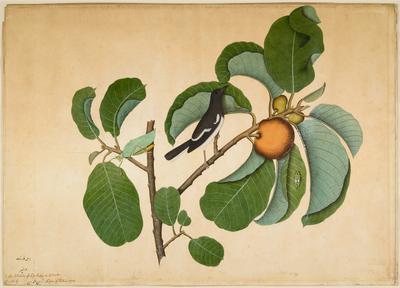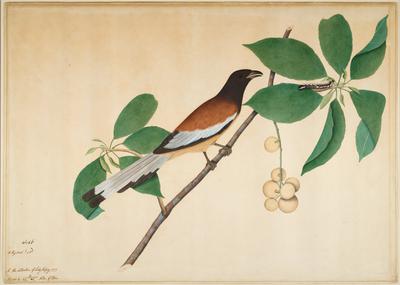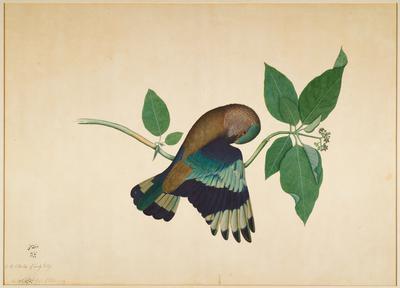
Indian Roller on Sandalwood Branch
- Medium
- Opaque colors and ink on paper
- Dimensions
- 30 × 38 × 1 in. (76.2 × 96.52 × 2.54 cm) (outer frame)
Tags
India
About
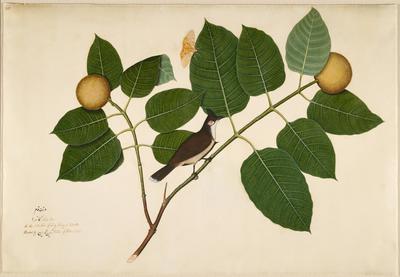
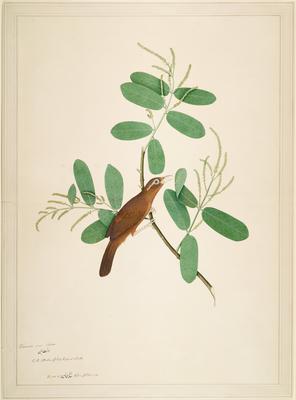
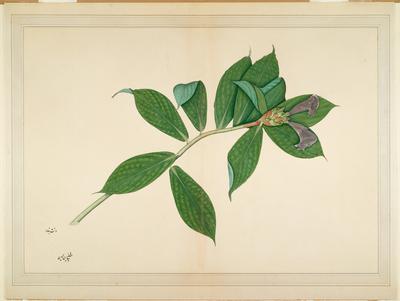
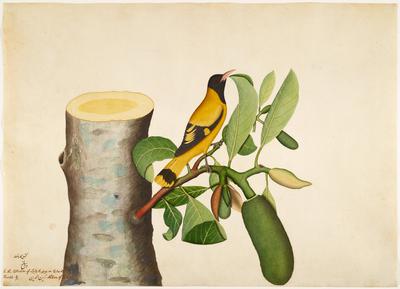
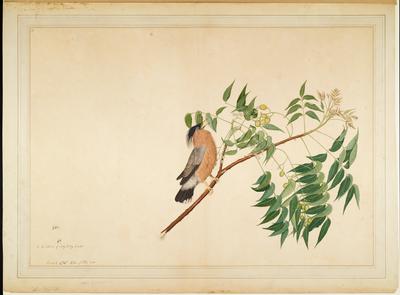
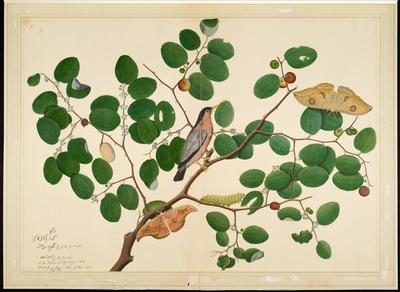
By 1772, the British East India Company had grown from a small trading company seeking access to lucrative spice routes into a military and administrative power that gained effective rule over the Indian subcontinent. One result of this colonial domination was the emergence of an Anglo-Indian aesthetic, called “Company Painting, ” in which Indian artists adapted their skills to satisfy British tastes. A classic example is the Impey Album, to which this painting originally belonged. Between 1777 and 1783, Lady Mary Impey, wife of the chief justice of Bengal, commissioned three artists—a Muslim, Sheikh Zain al-Din; and two Hindus, Bhawani Das and Ram Das—to produce a natural history album documenting the newfound wonders of her Calcutta (now Kolkata) garden. For a highly trained artist such as Sheikh Zain al-Din, colonial commissions filled the power/patron vacuum left by a crumbling Mughal Empire. This exchange resulted in what you see here: a popular European format imbued with the tender naturalism of the late Mughal school.